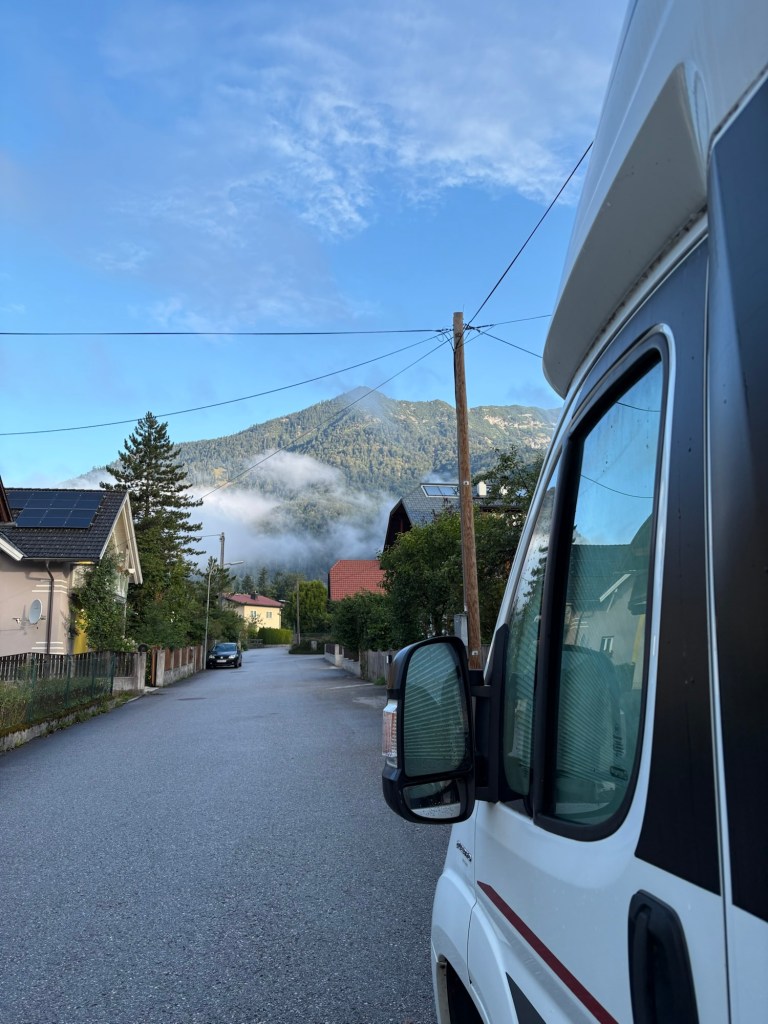
Today marked the end of Team Bernard’s time in the mountains. The Zimnitz loomed over us this morning:
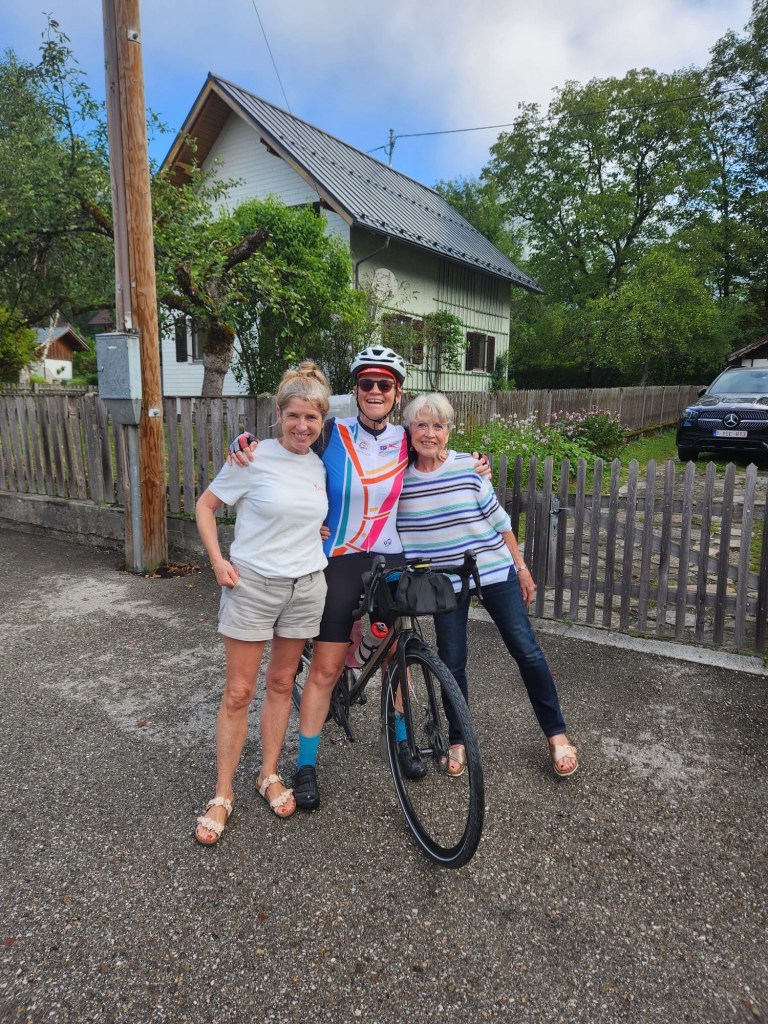
As we said goodbye to our friends:
The peaks of the Salzkammergut were veiled in cloud:
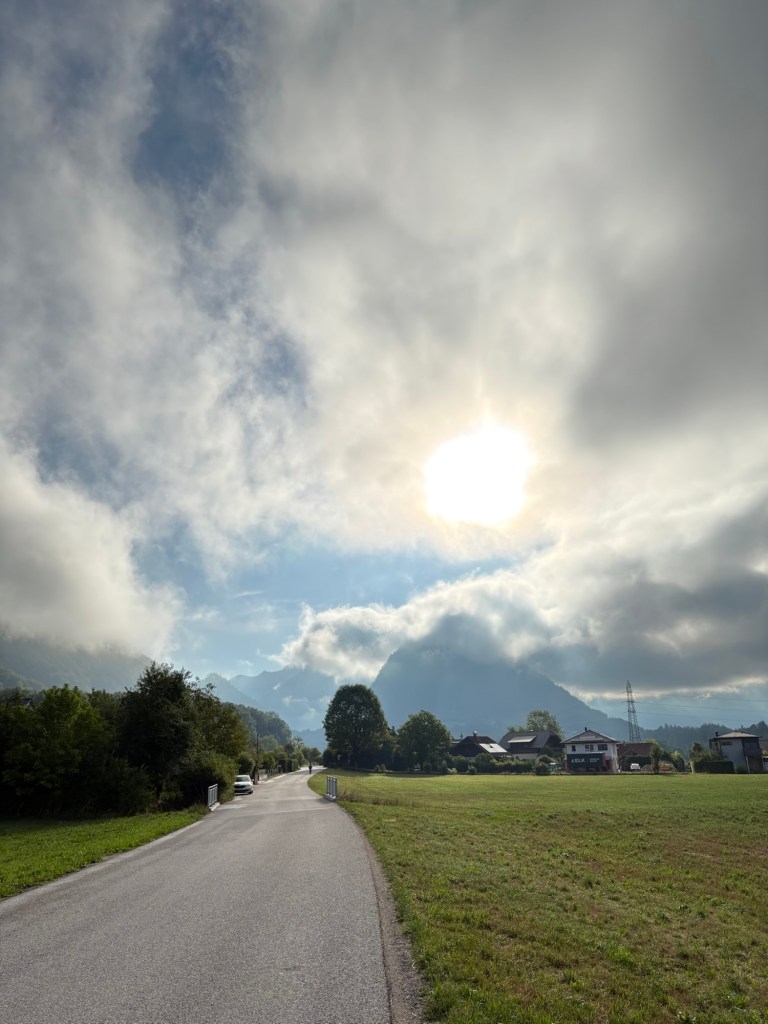
And their flanks guarded the river Traun:
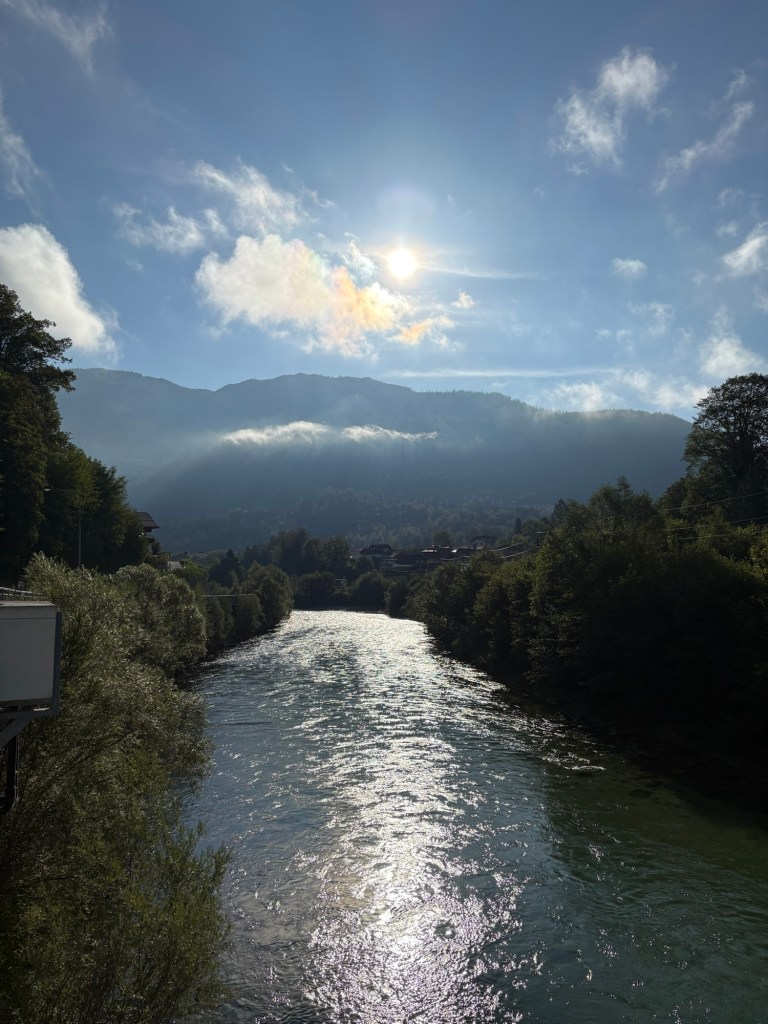
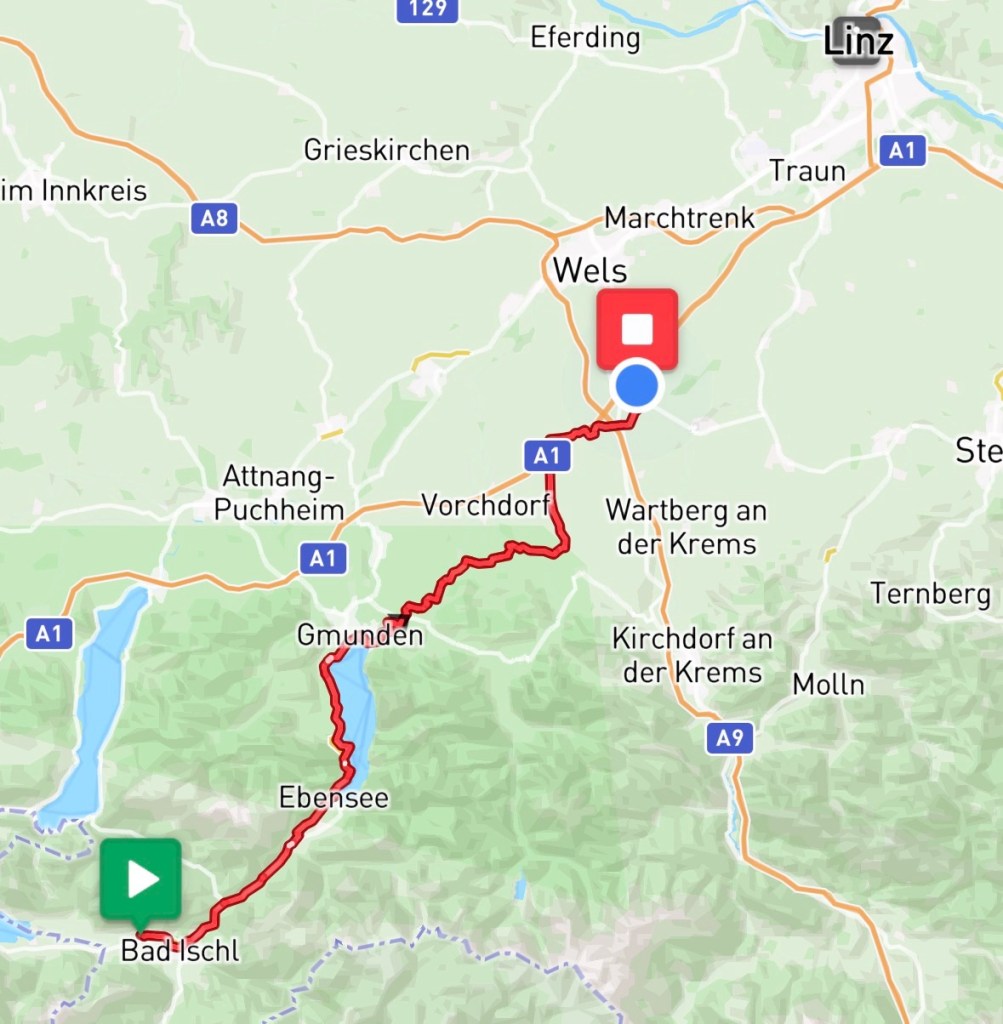
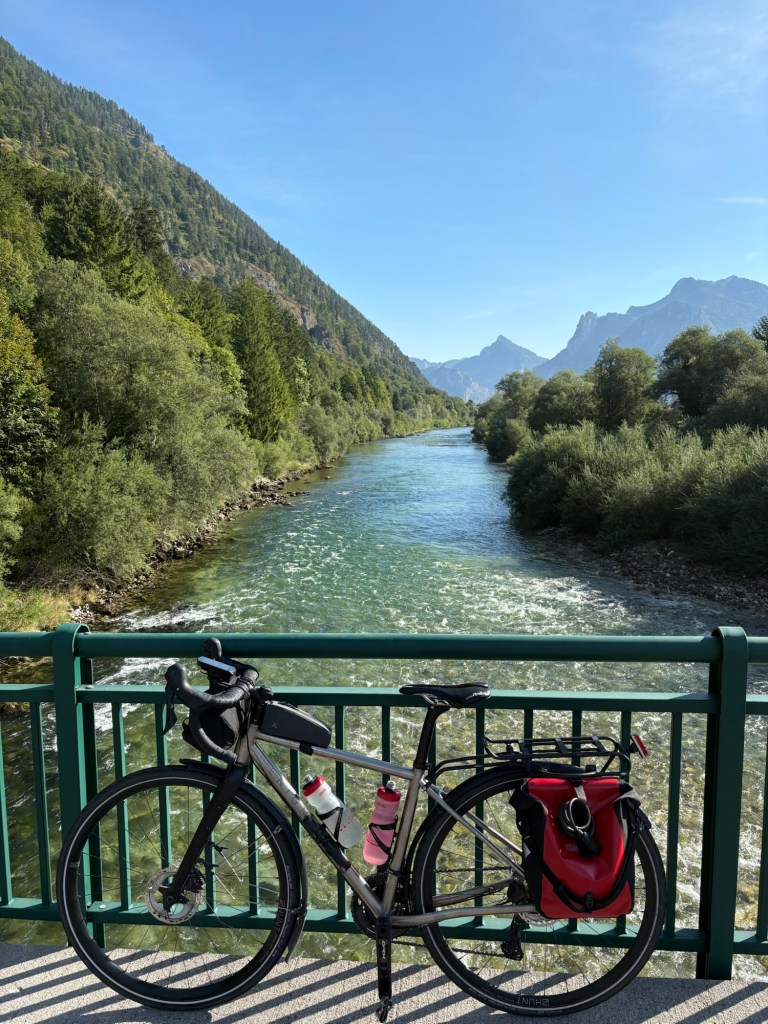
As we followed it north and downstream, away from Bad Ischl:
Side note: Bad Ischl earned its place in the history books as the town where Austro-Hungarian Emperor Franz Josef I signed the declaration of war on Serbia – which ultimately led to the First World War.
The signature happened in Bad Ischl because the Emperor spent every summer there, believing he owed his life to the place, having been conceived after his mother took the (salty) waters as a cure for infertility in 1828. Which by the way was why he and his brothers were called the Salzprinzen (Salt Princes). Are you keeping up at the back?
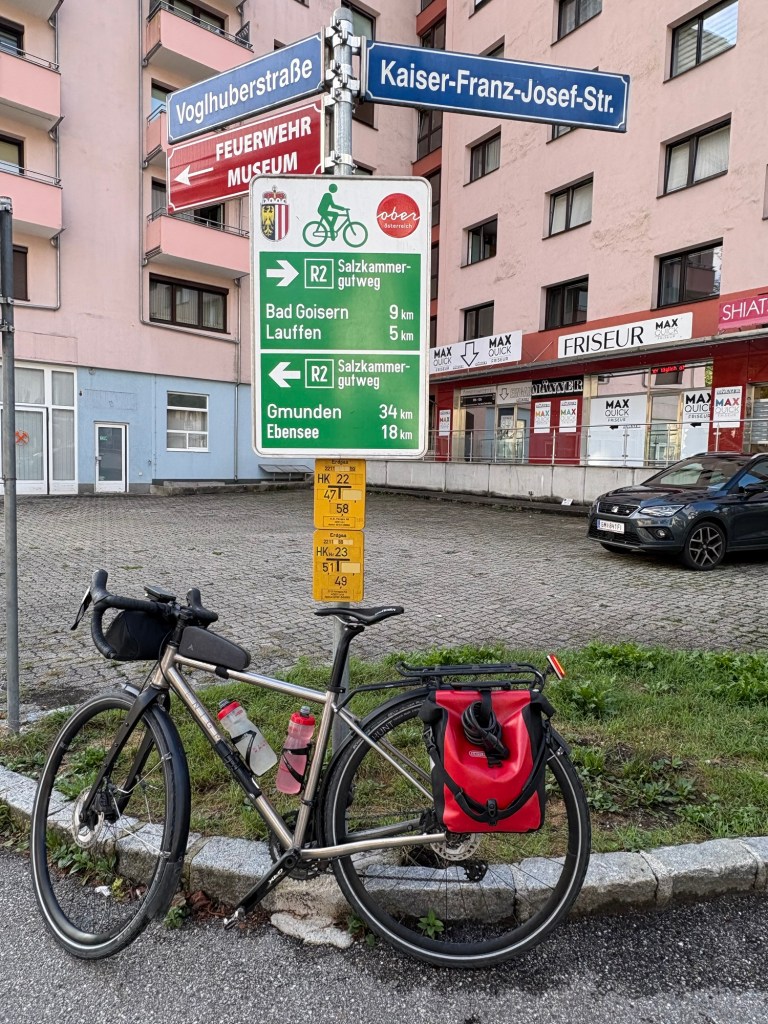
The town remembers him in multiple ways, of which this is possibly the least grandiose:
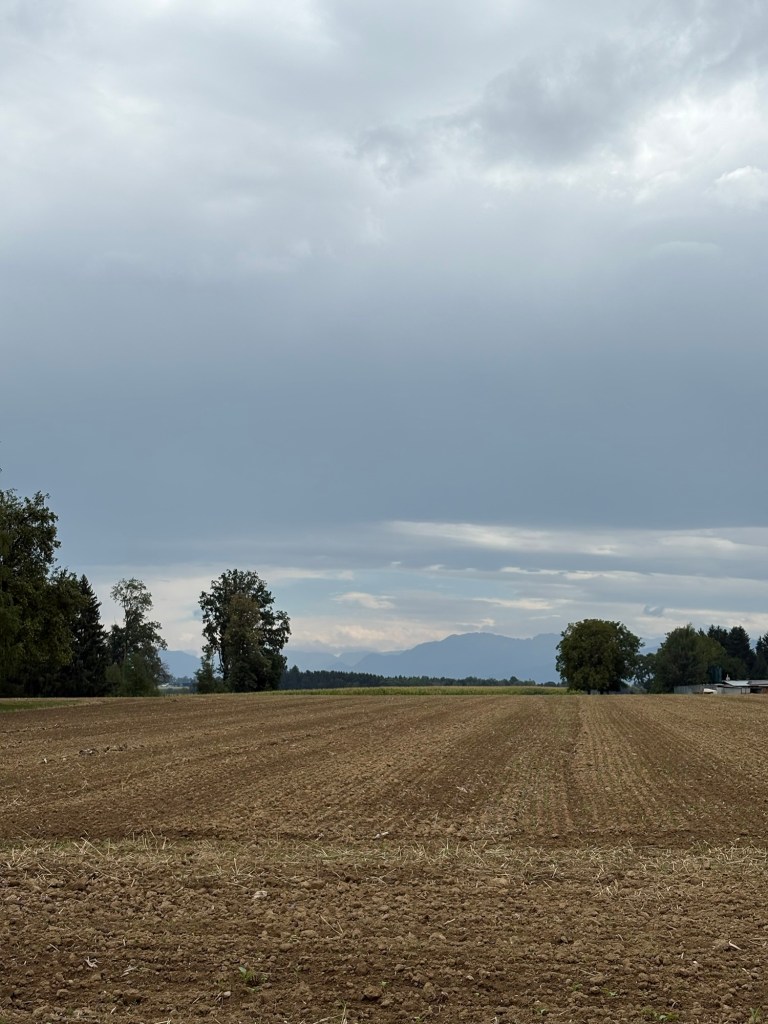
But back to those mountains. By the end of the day’s ride, they were just a few purply-grey hills in the distance, fringing wide-open farmland. Despite the effort they cost me, I know I’ll miss them when they’re gone:
Highlights today included:
Our first glimpse of Traunsee, Austria’s deepest lake at 192m:
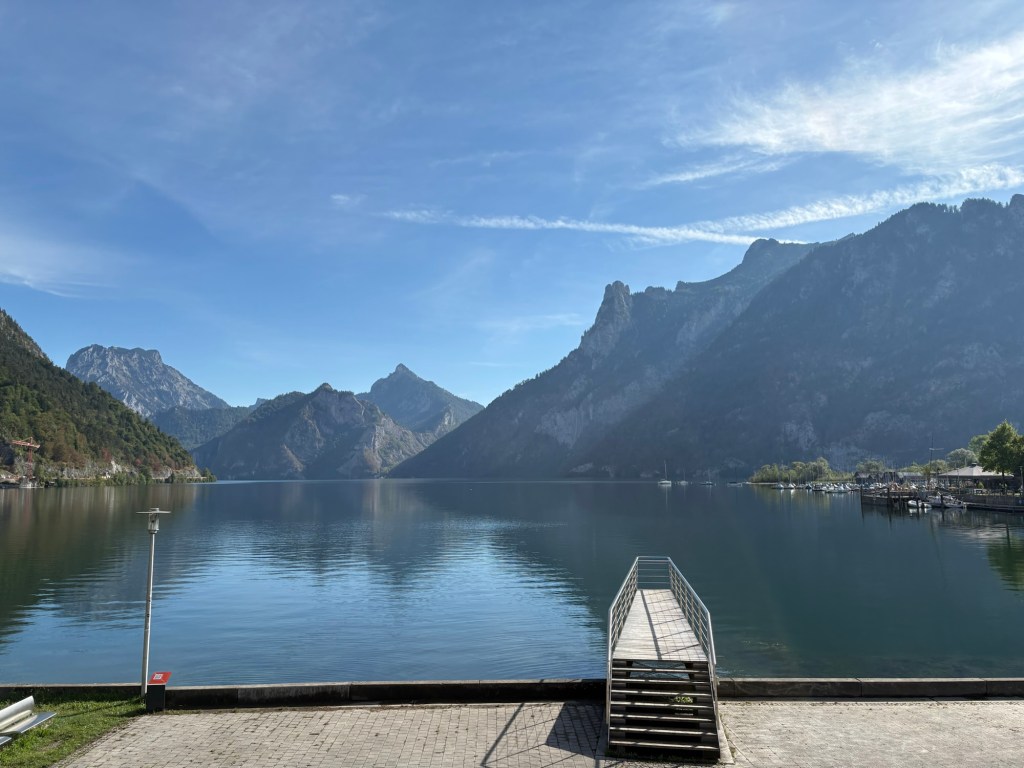
The fantastic Traunsee bike path, which hugged the west bank, skirting several tunnels via our own special road – this is just for bikes and service vehicles:
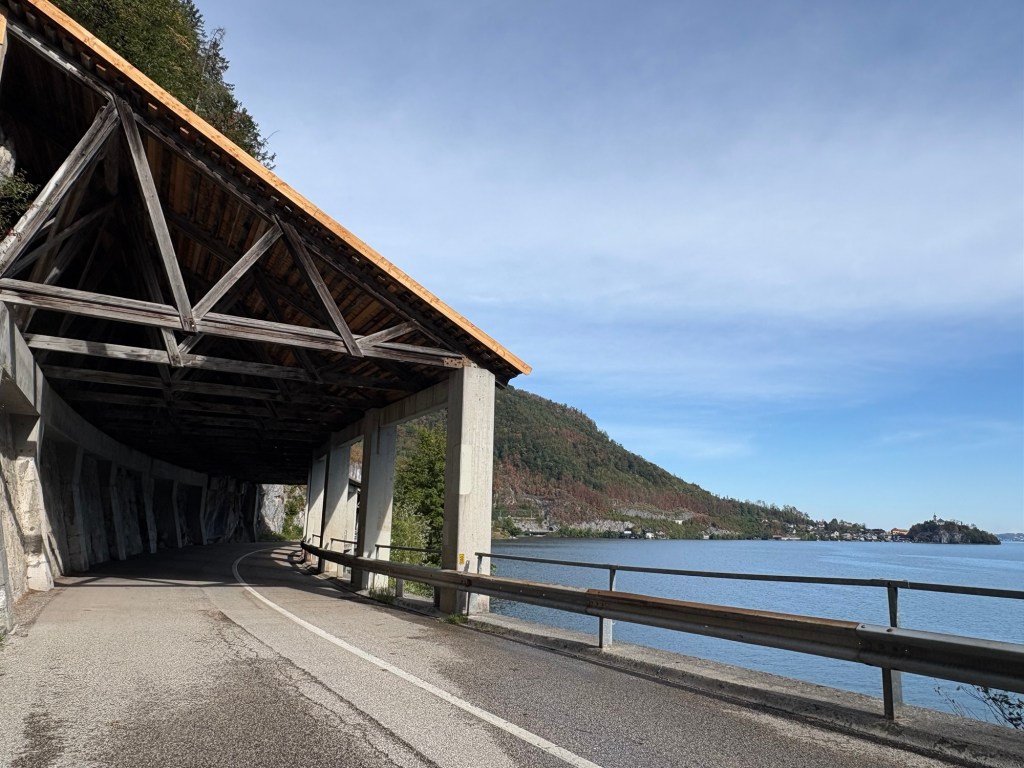
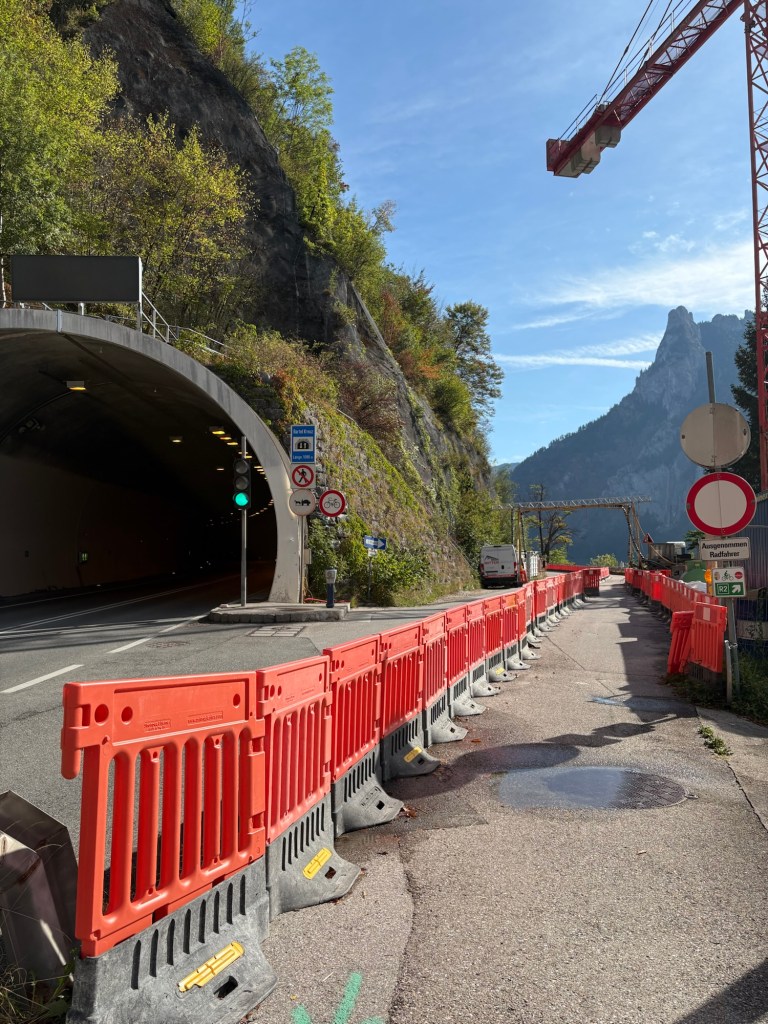
Bikes were still protected, even when there were roadworks:
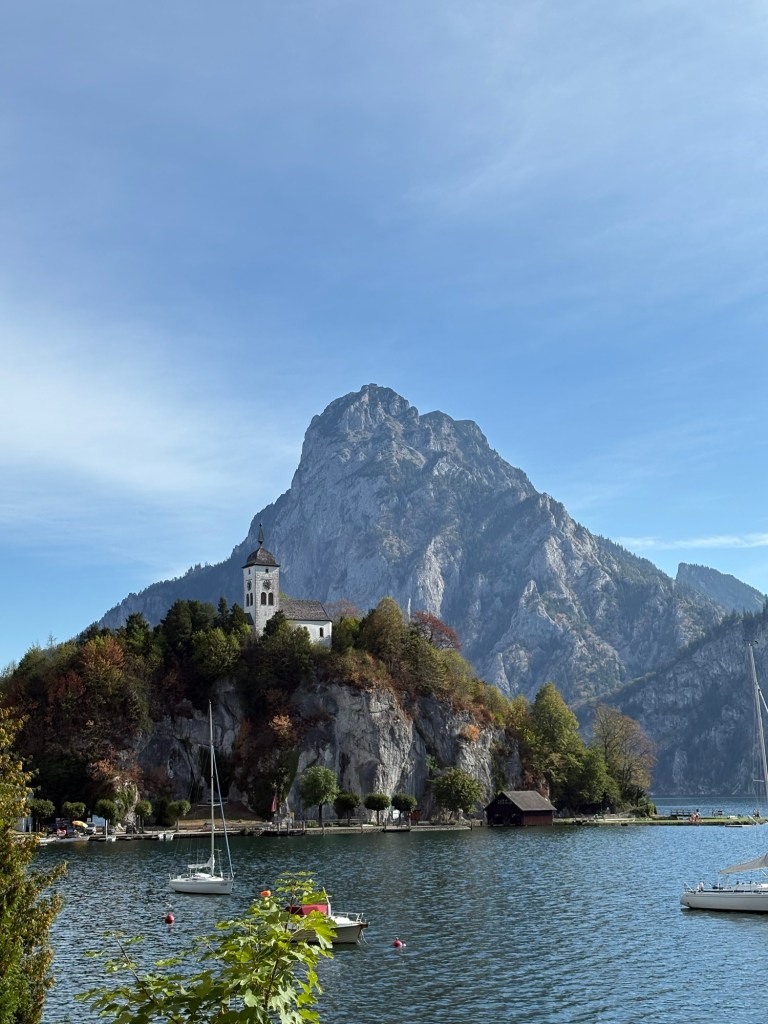
And I loved this view of the tiny village of Traunkirchen – although you may be grateful that I didn’t go for a wider-angled shot. As I stopped to take a photo, a gentleman emerged from the lake directly below me, stark naked. I took my picture carefully, and quickly:
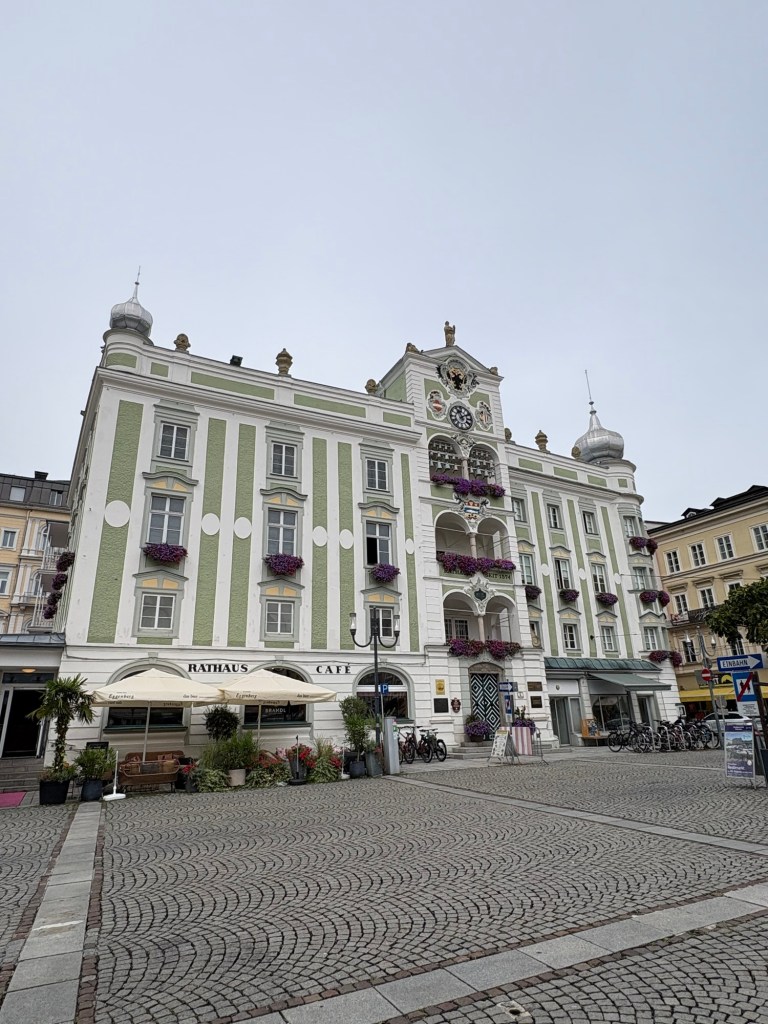
A dozen kilometres further north, at the top of Traunsee, we pedalled into Gmunden, a town built on the proceeds of salt, which presumably paid for this very snazzy town hall:
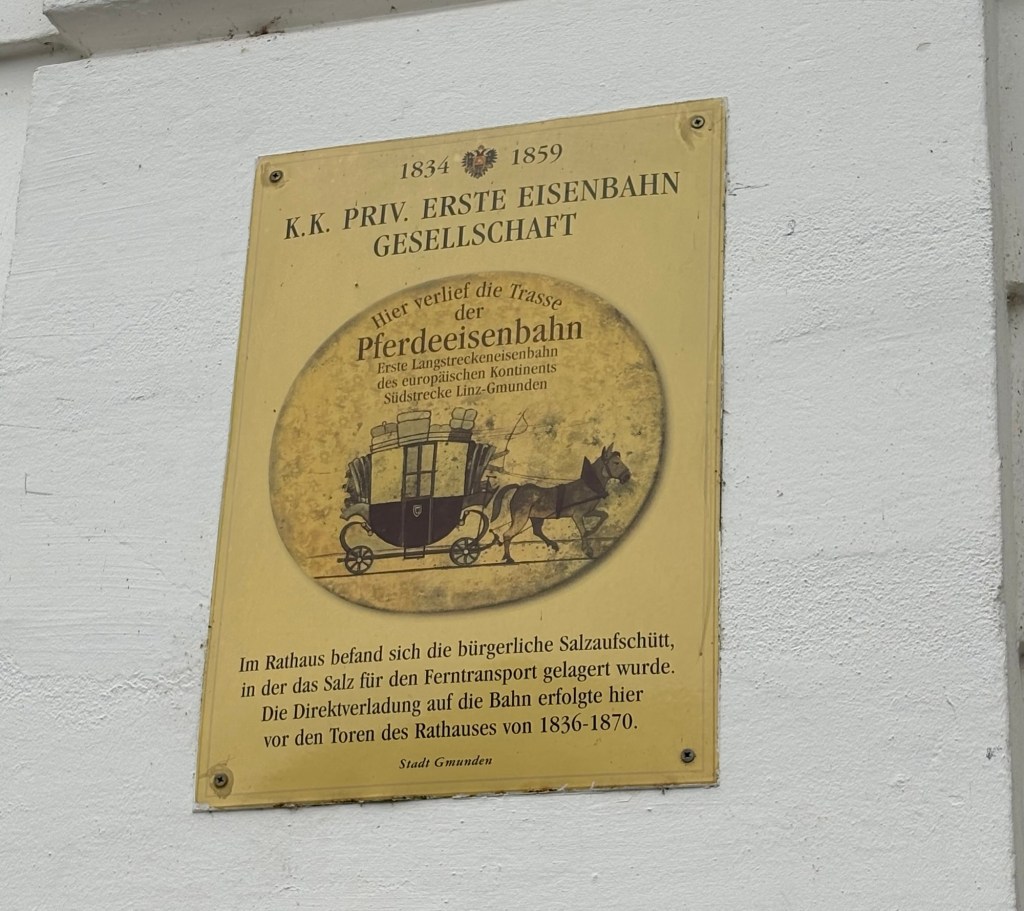
It was the starting point for the Gmunden-Linz-Budweis horse-drawn railway, or ‘Pferdeeisenbahn’, which Gloria Google tells me was only the second public railway to open in Europe. Its main purpose was to transport salt from the Salzkammergut to Bohemia:
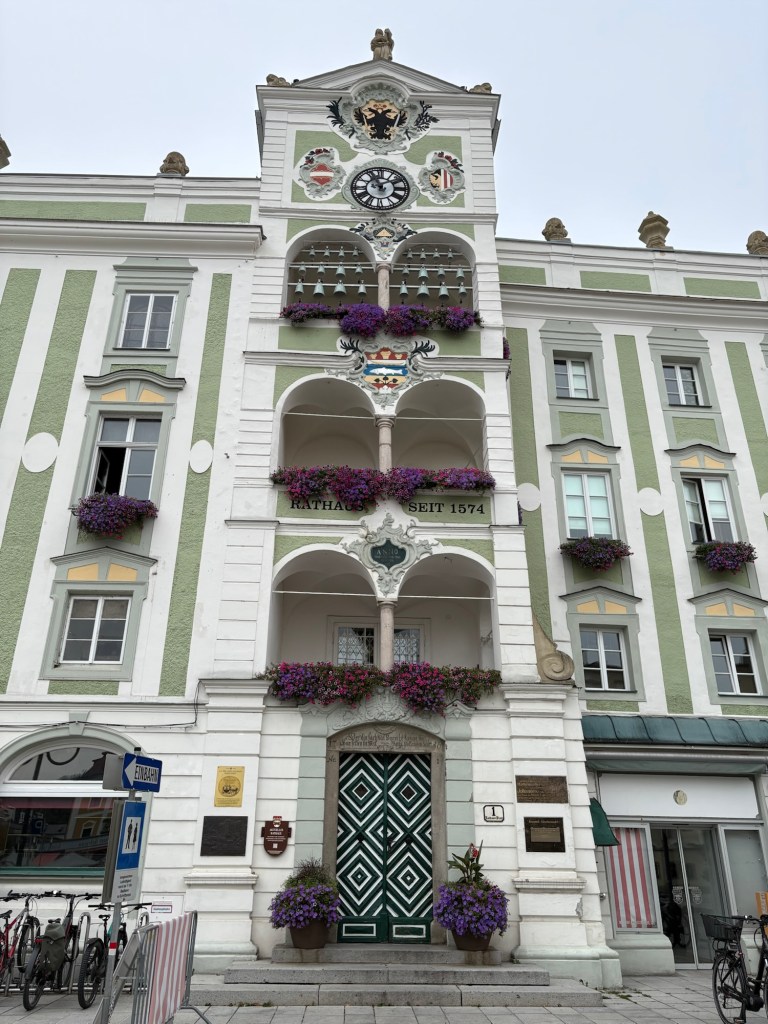
By the way, check out the rows of ceramic bells on the town hall:
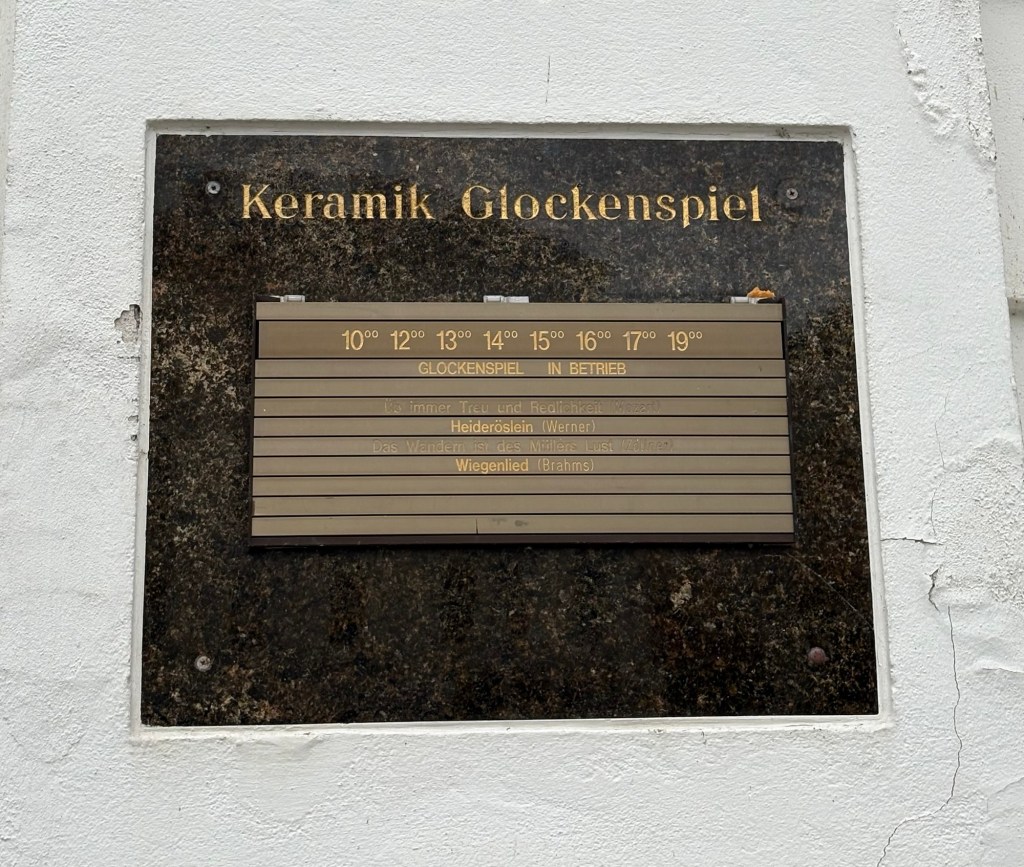
I think the sign says that they play either Werner or Brahms, depending on the time of day:
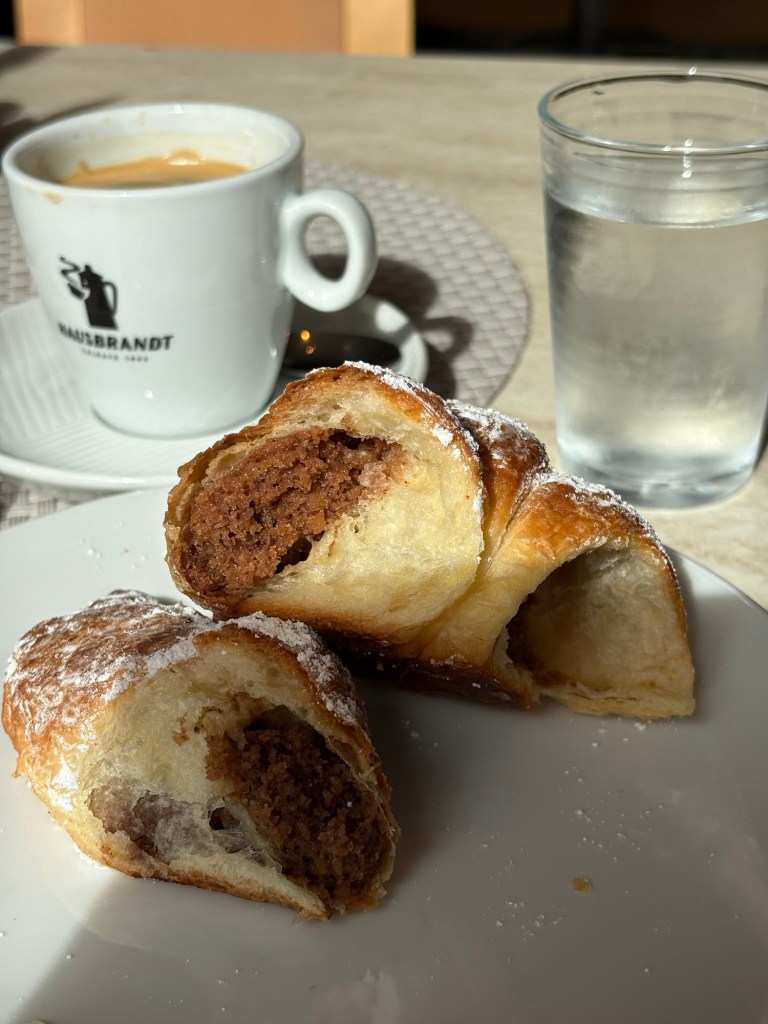
Today’s culinary discovery – and one that packed enough calories to keep me fuelled for hours – was a croissant filled with walnut paste:
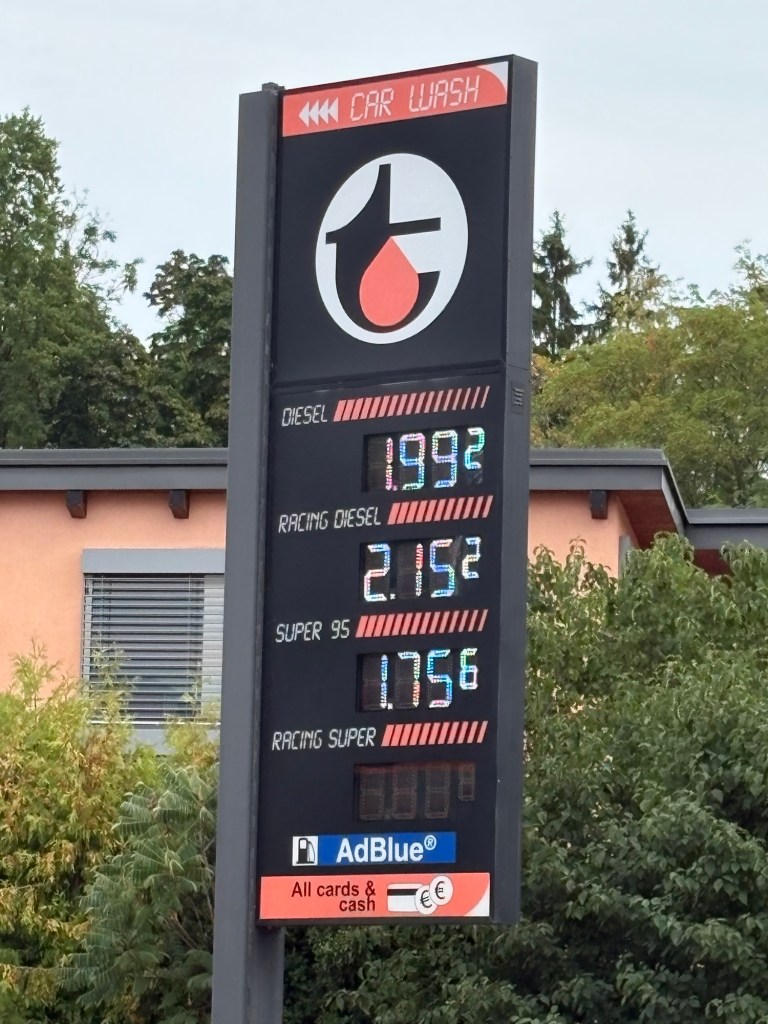
Speaking of fuel, what on earth is Racing Diesel?
And speaking of innovations, I learned that when a sweaty cyclist is overtaken by a tractor pulling a trailer full of sawdust:
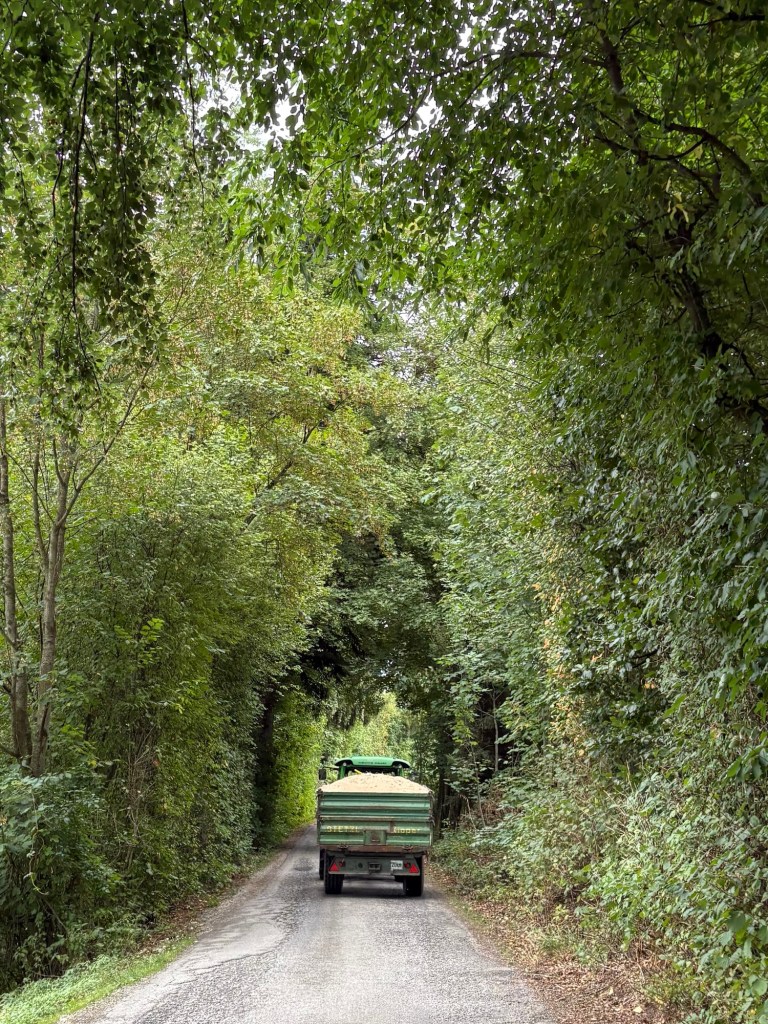
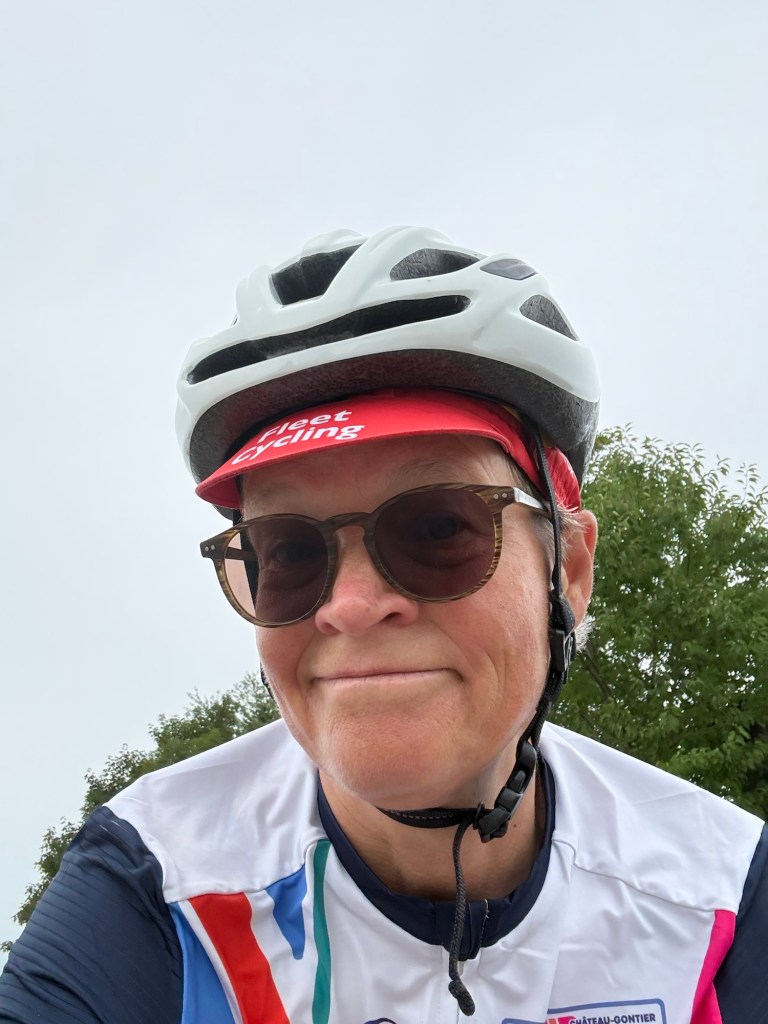
The two things combine to create the beauty treatment we’ve all been waiting for: a wood chip facial. See? Transformed:
Meanwhile, with all the excellent signage:
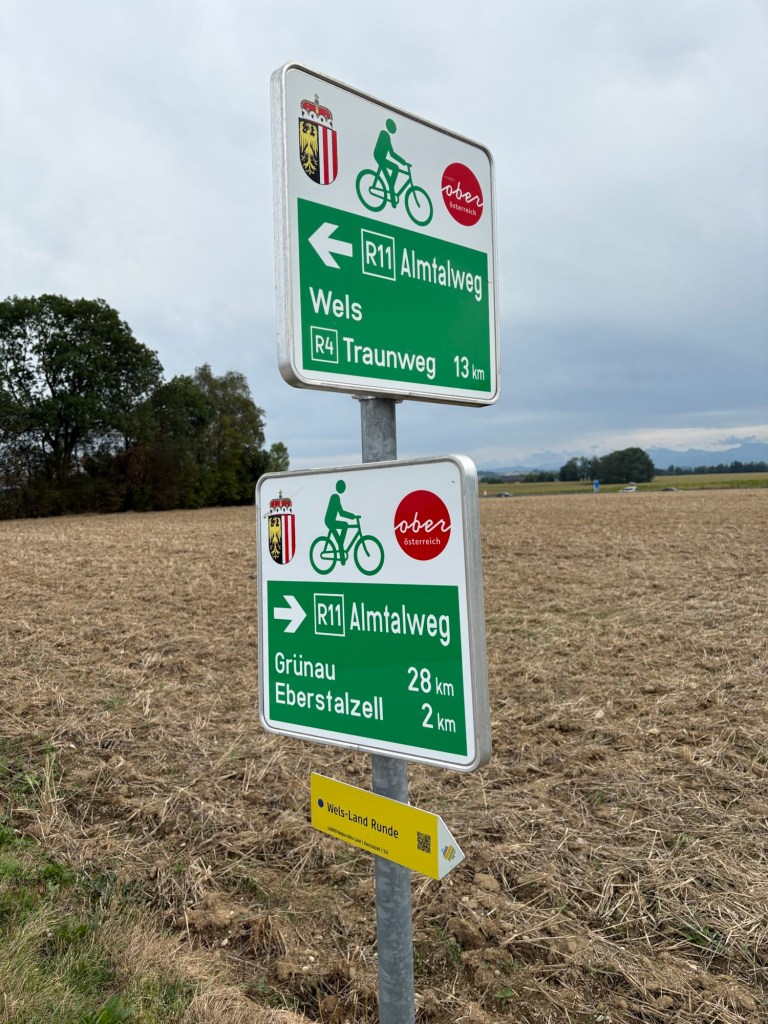
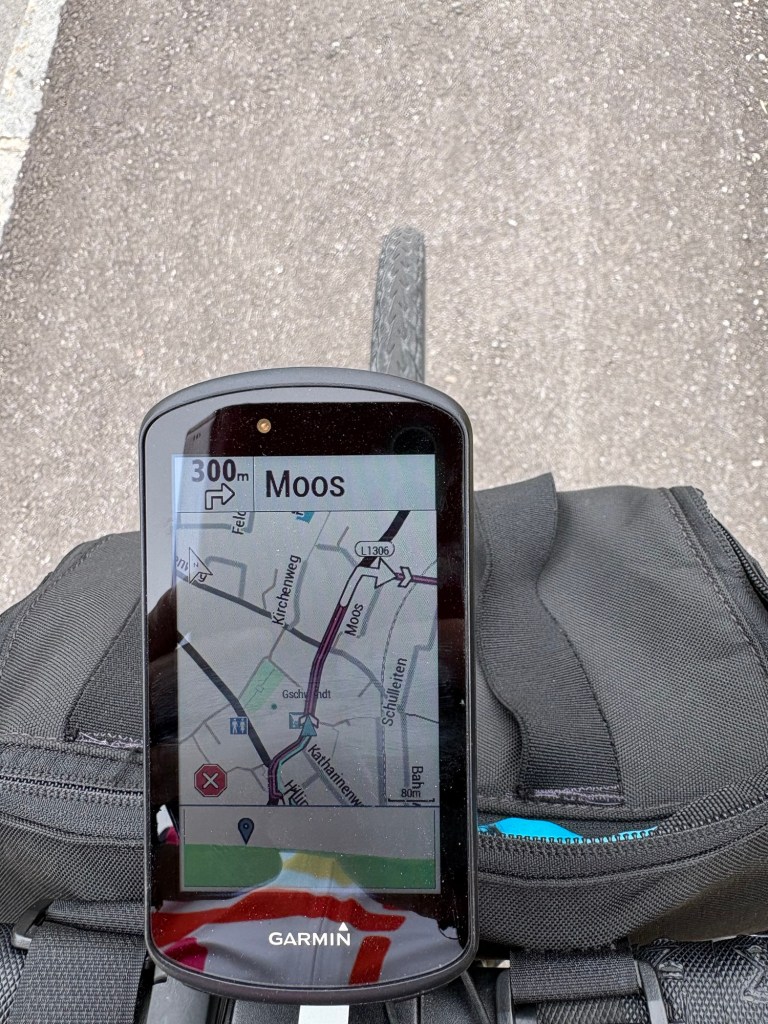
Guillaume had very little to do, and amused himself by sniggering at local place names again:
But this was my Sign of the Day. How do residents of this village spend their time, I wondered:
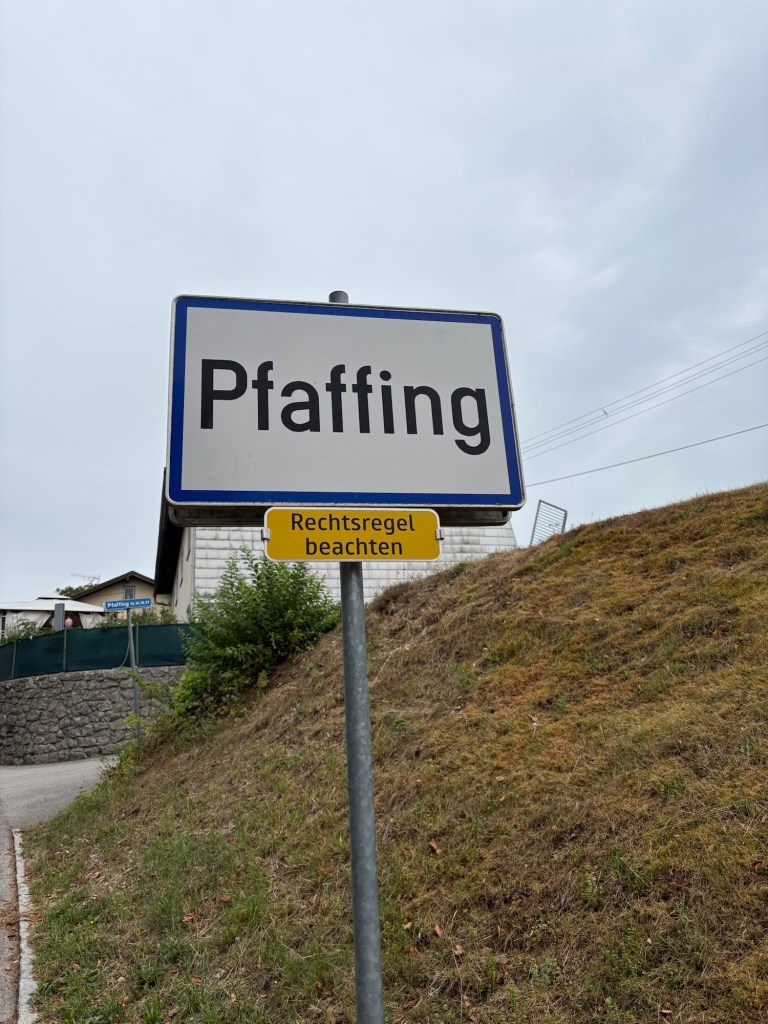
Team Bernard certainly weren’t pfaffing about today: spurred by warnings of wild weather, we pressed on, climbing away from Traunsee to our rendezvous with Team Midge, this time on an organic flower farm near Wels:
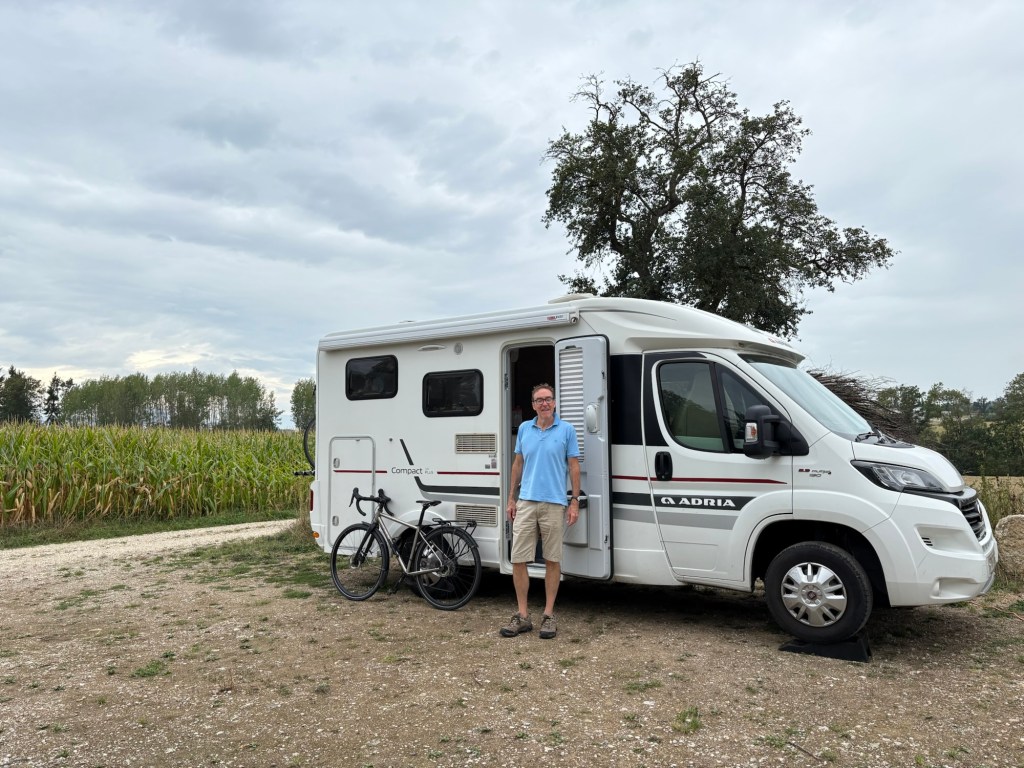
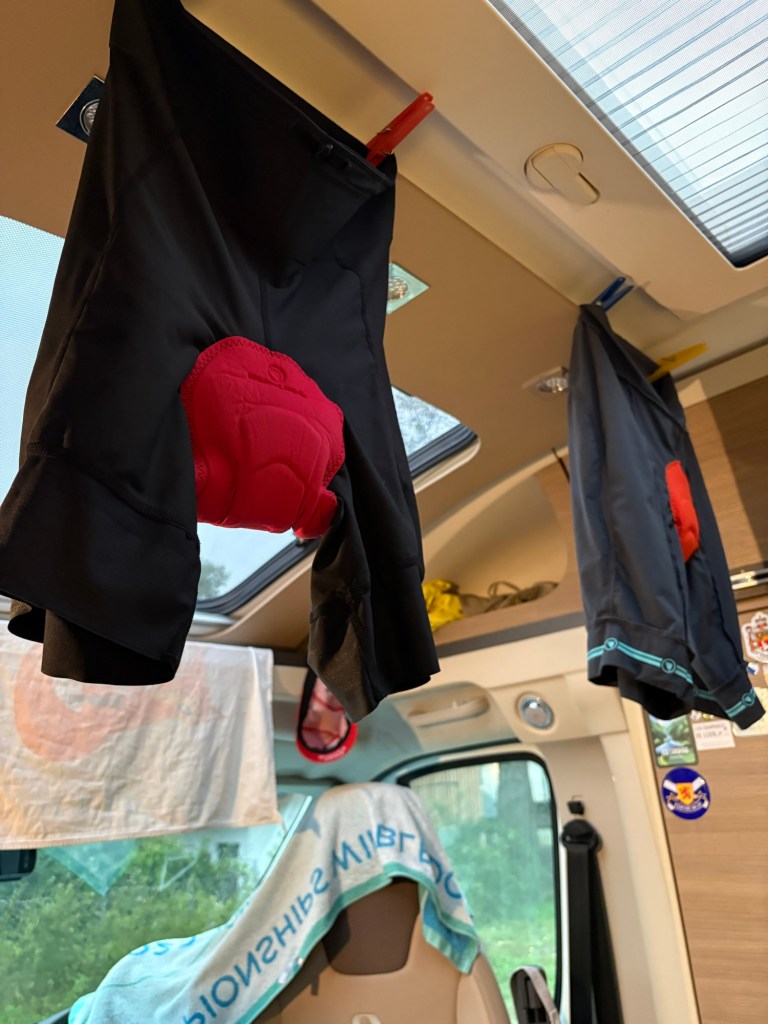
We made it without getting wet, but the warnings didn’t exaggerate: it’s currently lashing it down and blowing a gale, so we’re having to improvise with my washing:
Tomorrow, it’s downhill all the way to the Danube!


 clairedavieswriter
Leave a comment