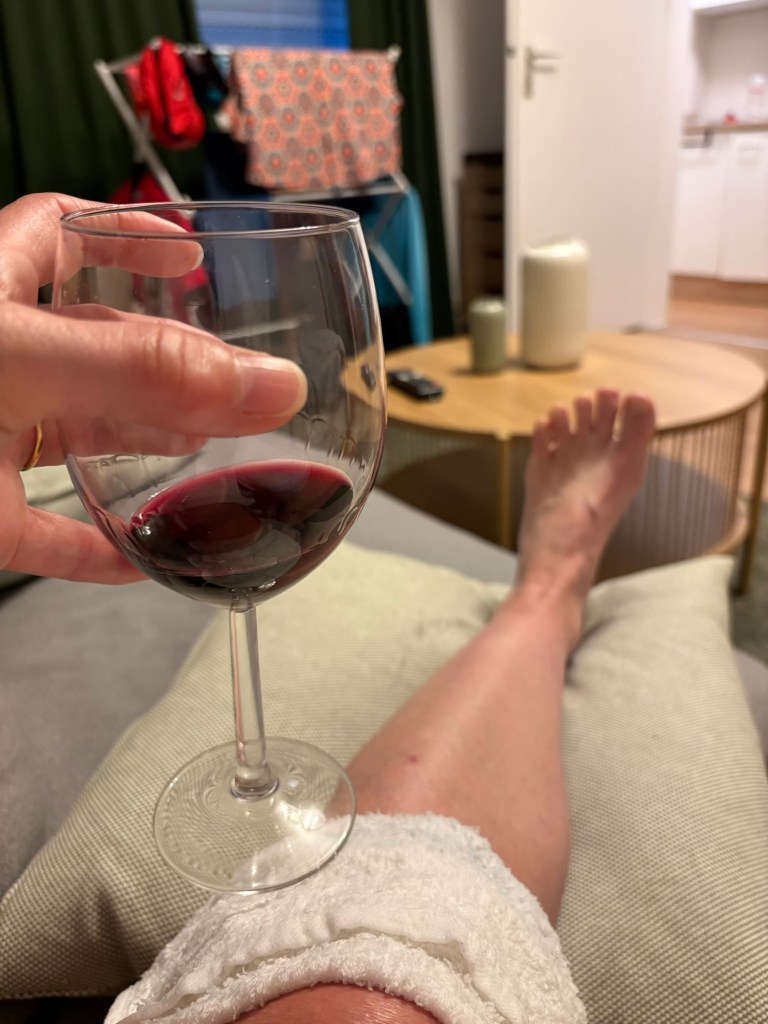
Wounded Knee reported for duty this morning, though I decided to play it safe and go into town by tram. Nothing like signing up to a new app for testing your language skills. What, pray, is the etymology of the German for adult? Word of the day: Erwachsene.
Trams in Augsburg are plentiful, clean (inside and emissions-wise), and quiet. Although I noticed that their air conditioning was no better than on many London buses (as George W Bush might say, do the Germans have a word for schadenfreude?):
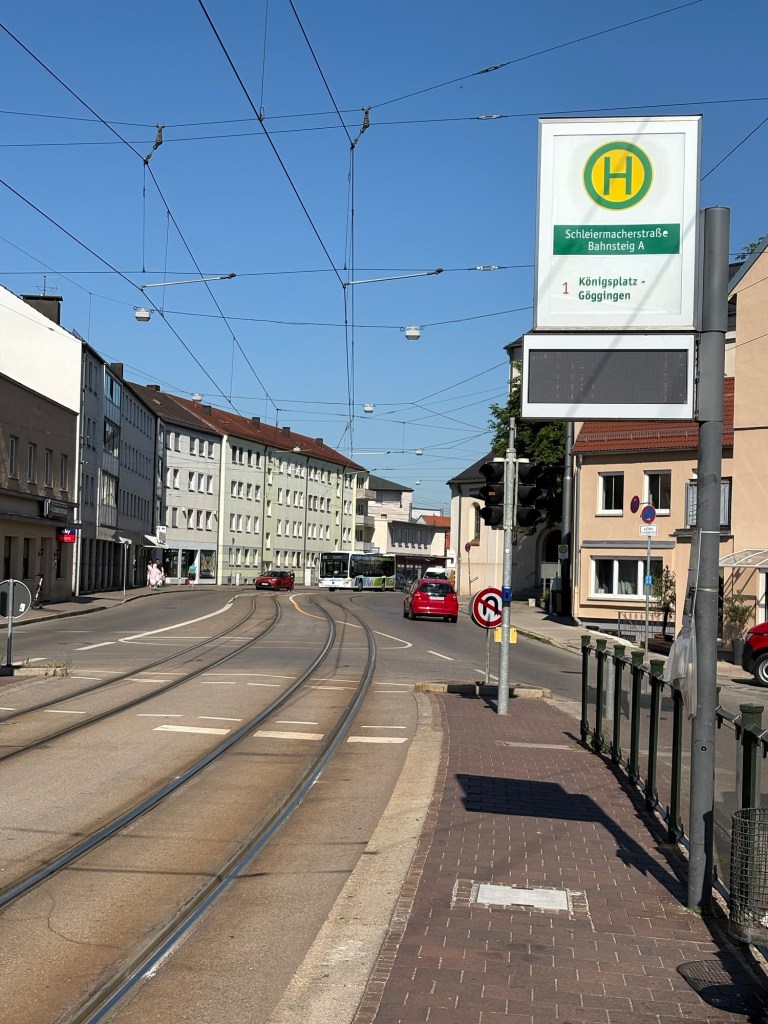
It’s striking how many bikes there were in the city centre, and as elsewhere in Germany, there’s a permissive attitude: cyclists ride on the pavement, and no one bats an eye. Mind you, there’s so little car traffic, probably because the public transport is so good (see trams, above) that most cyclists use the road – taking care with the tram tracks.
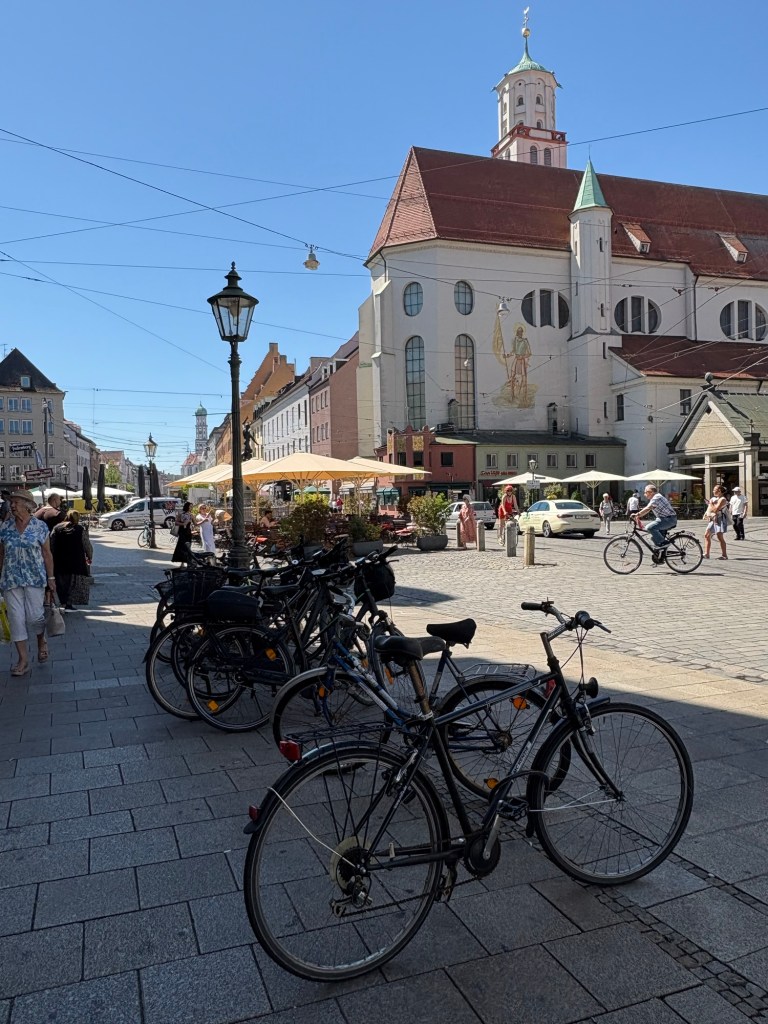
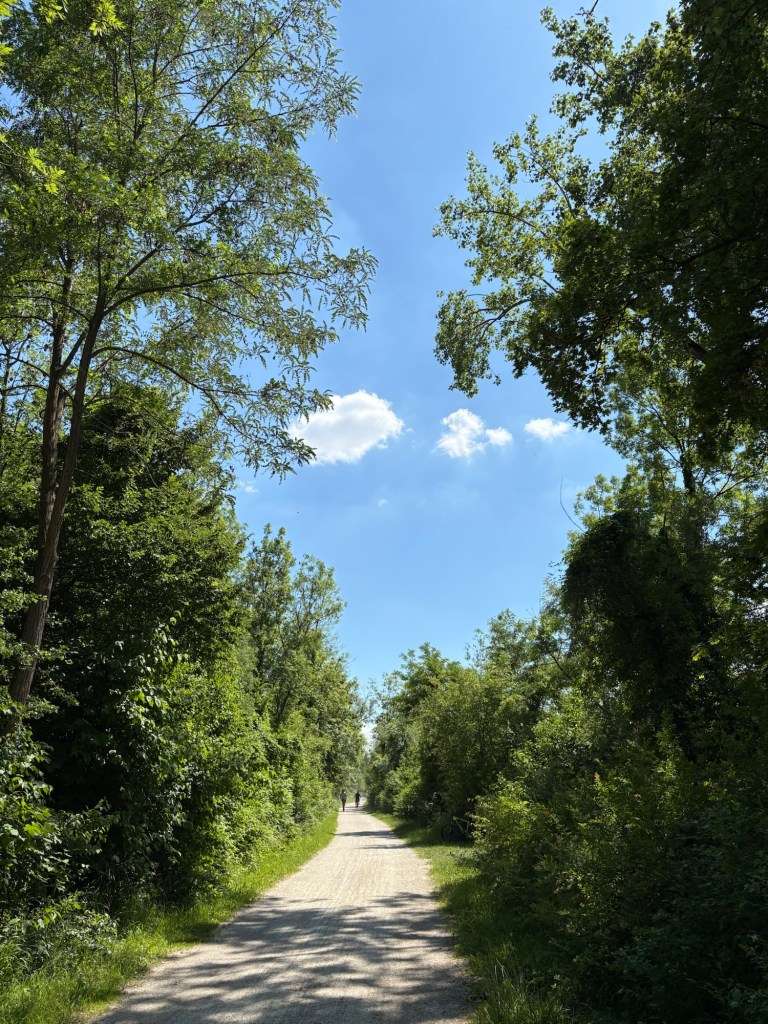
It was particularly noticeable how many women of all ages were using bikes to get around, and their attire spoke volumes of how safe they felt: dresses, flip flops, very few helmets. After two weeks of experiencing German cycle infrastructure I wasn’t all that surprised. This was on my way in yesterday, within a mile of the city centre:
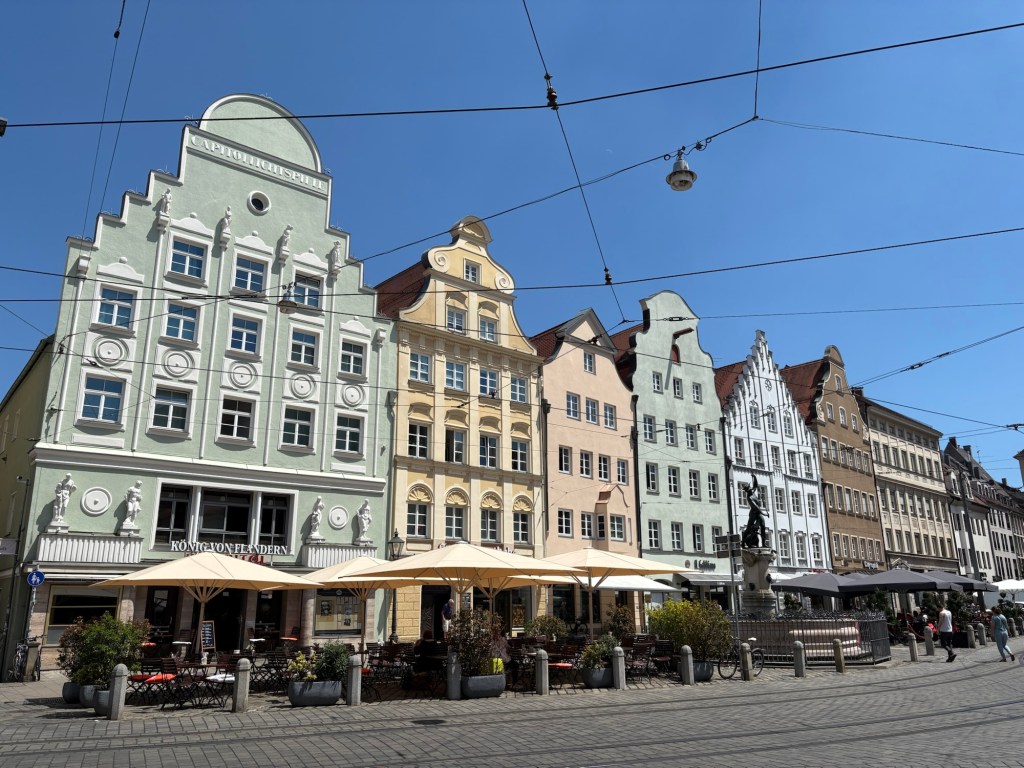
Augsburg today is about the size of Coventry, but it began as a Roman settlement, and built its wealth on textiles. By the 20th century it was known for its metal and engineering industries: the world’s first jet aircraft was designed here and during WW2 it was home to a Messerschmitt factory and the Maschinenfabrik Augsburg-Nuremberg (MAN), which produced submarine engines, tanks and ammunition. As a result it was targeted by allied air raids, which inflicted severe damage and casualties. But some of the old town survives:
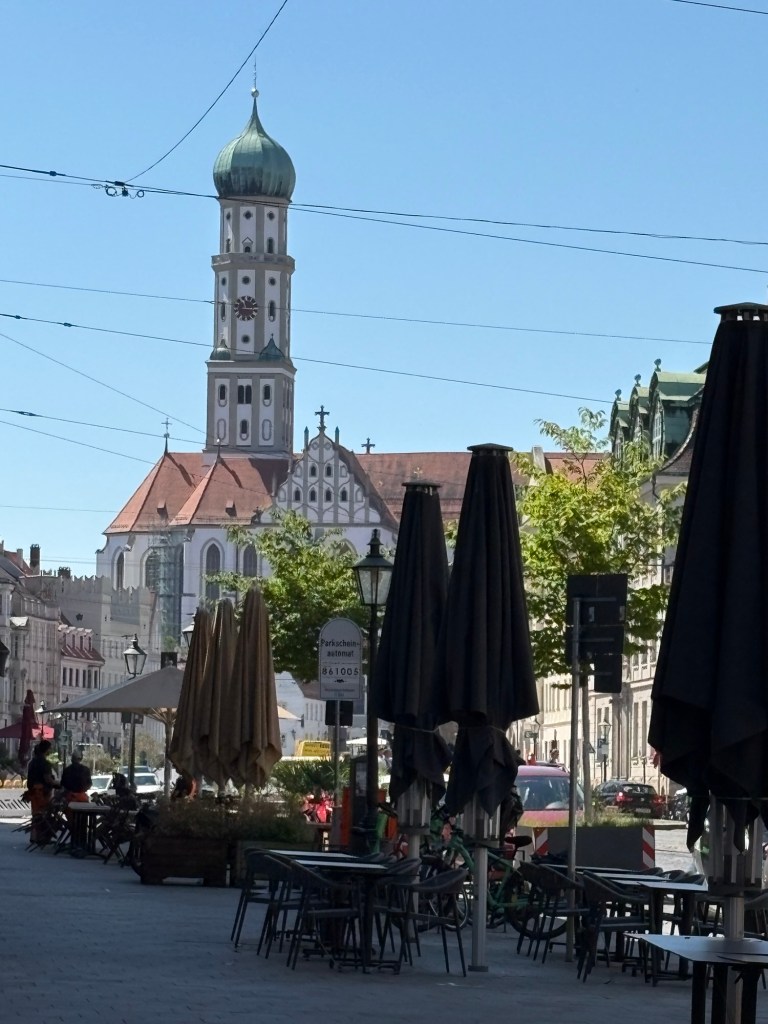
Including the extraordinary spire of the Catholic basilica of St Ulrich and Agra:
But arguably Augsburg’s most striking feature is the Fuggerei: the world’s oldest social housing project. People have lived there continuously for over 500 years, since its founder Jakob Fugger bought the land and built the original 52 homes to house Ausburg’s needy Catholics.
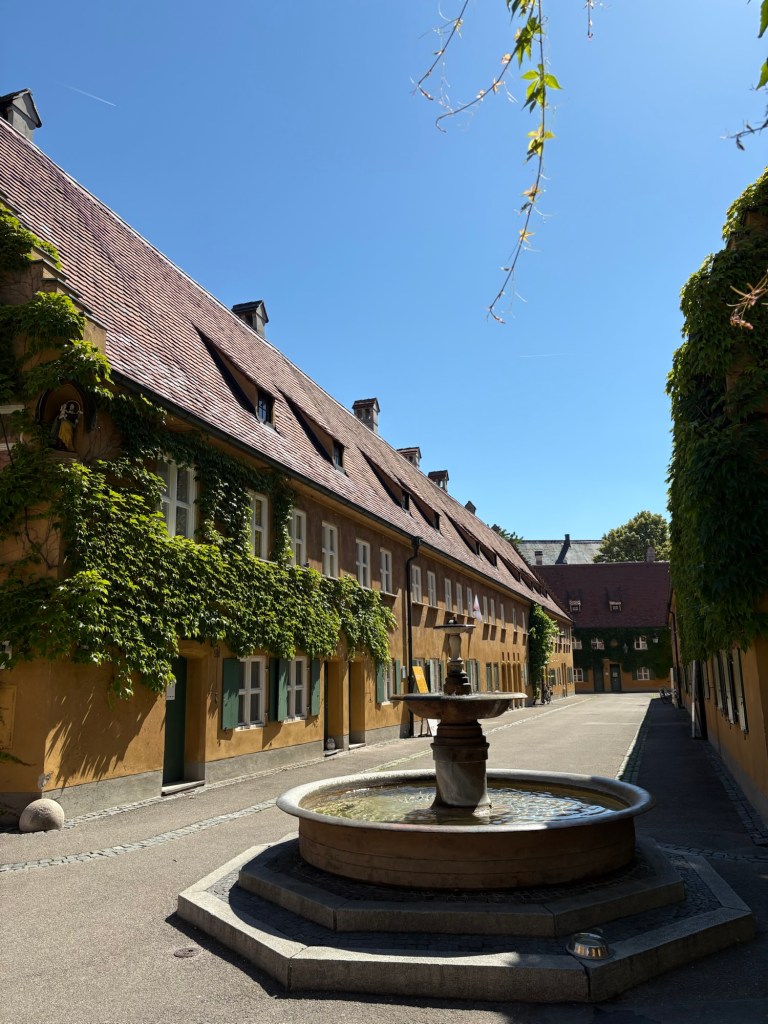
His foundation charter stipulated that residents should pay an annual rent of one Rhenish guilder, and today’s residents pay the 2026 equivalent: just €0.88 a year.
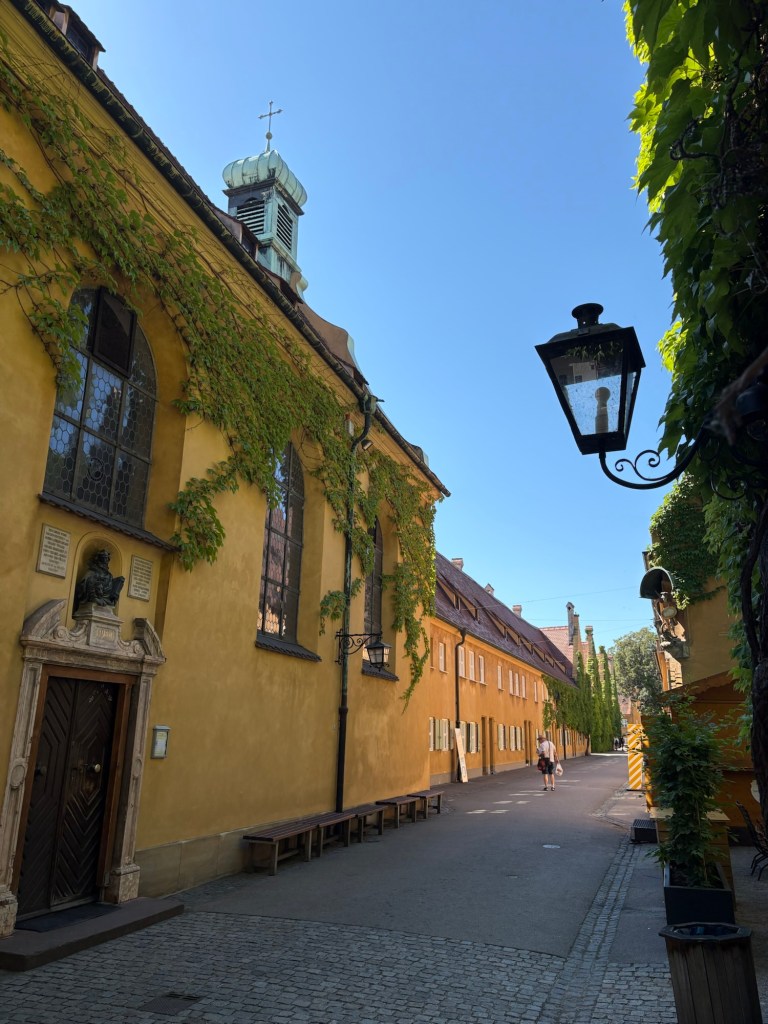
To this day, Jakob’s descendants play a leading role in managing the finances and assessing new resident applications.
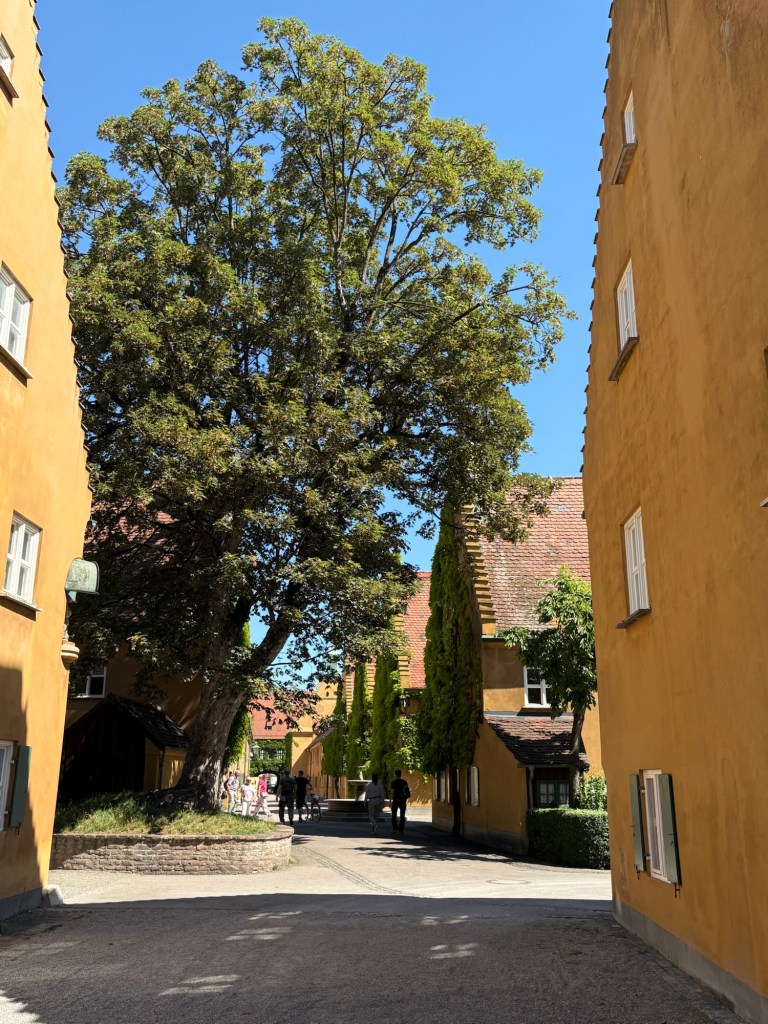
It’s a remarkably peaceful space just minutes from the city centre
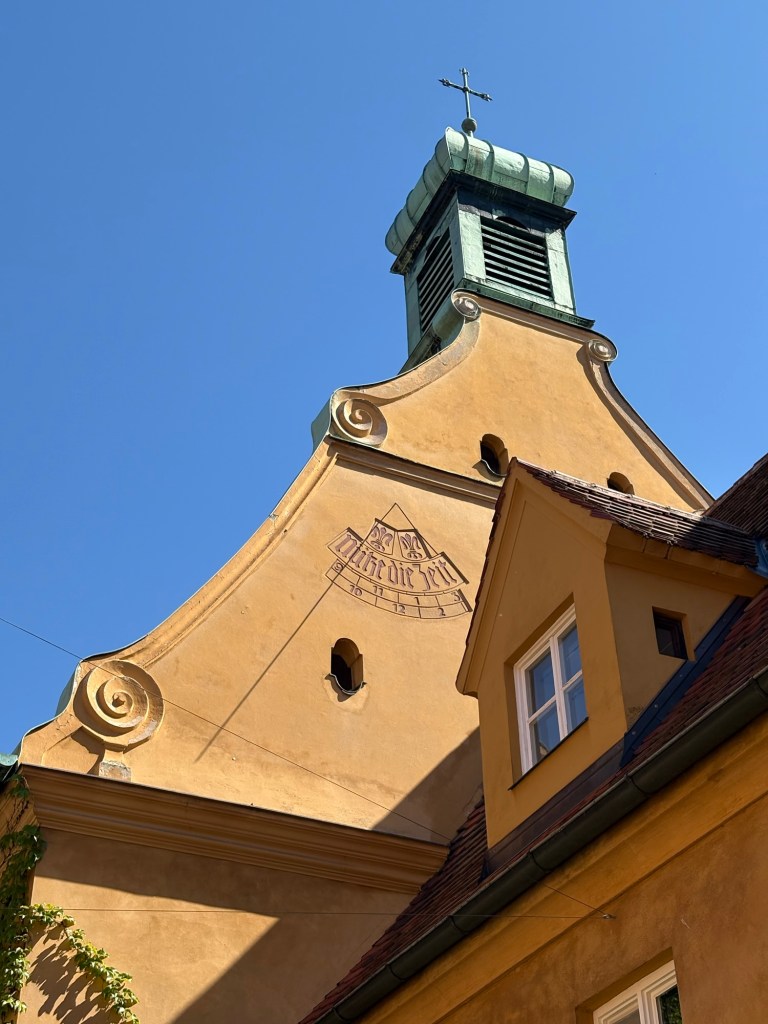
I particularly liked the message on the sundial, which was said to be Jakob Fugger’s guiding philosophy: ‘use your time’:
I feel I’ve used my time sensibly today, and barring further setbacks Team Bernard should be all set for the last leg (as it were). Tomorrow; Kaufbeuren. Bis morgen!

 clairedavieswriter
Leave a comment