I knew nothing about Zafra before we arrived this afternoon, and had very few expectations. In my mind it was just a convenient stopping off point between more significant and exciting places. But that’s the beauty of these trips: they can reveal hidden (to me) gems. Looking for our guest house, I glimpsed a pretty view through an arch:
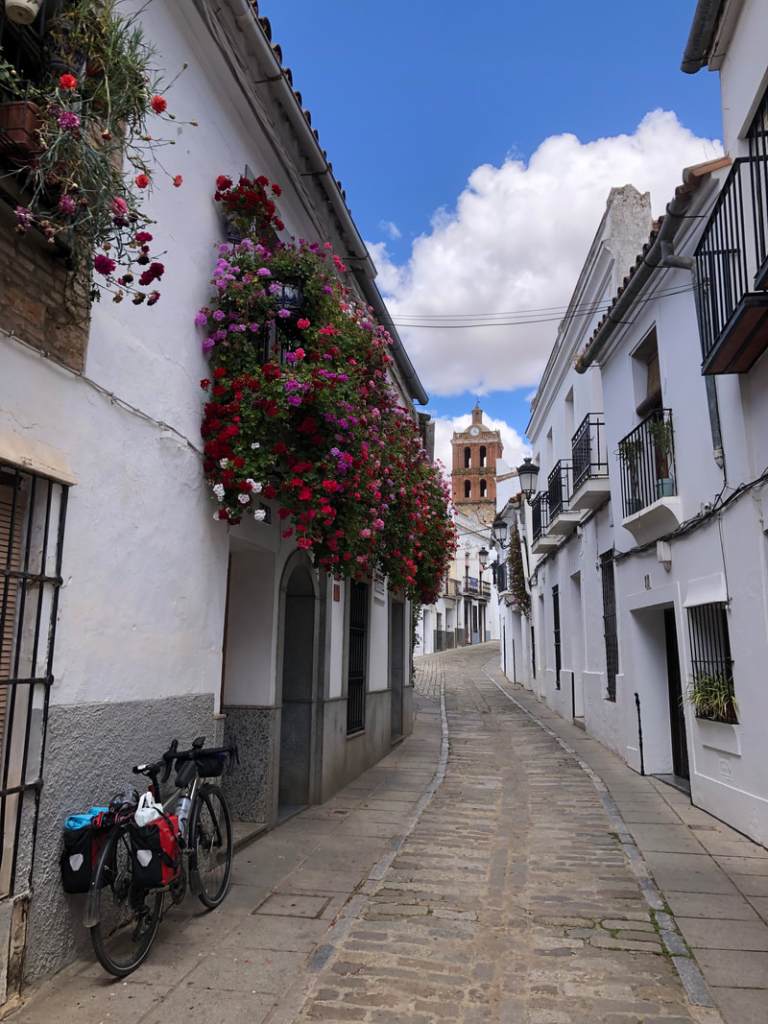
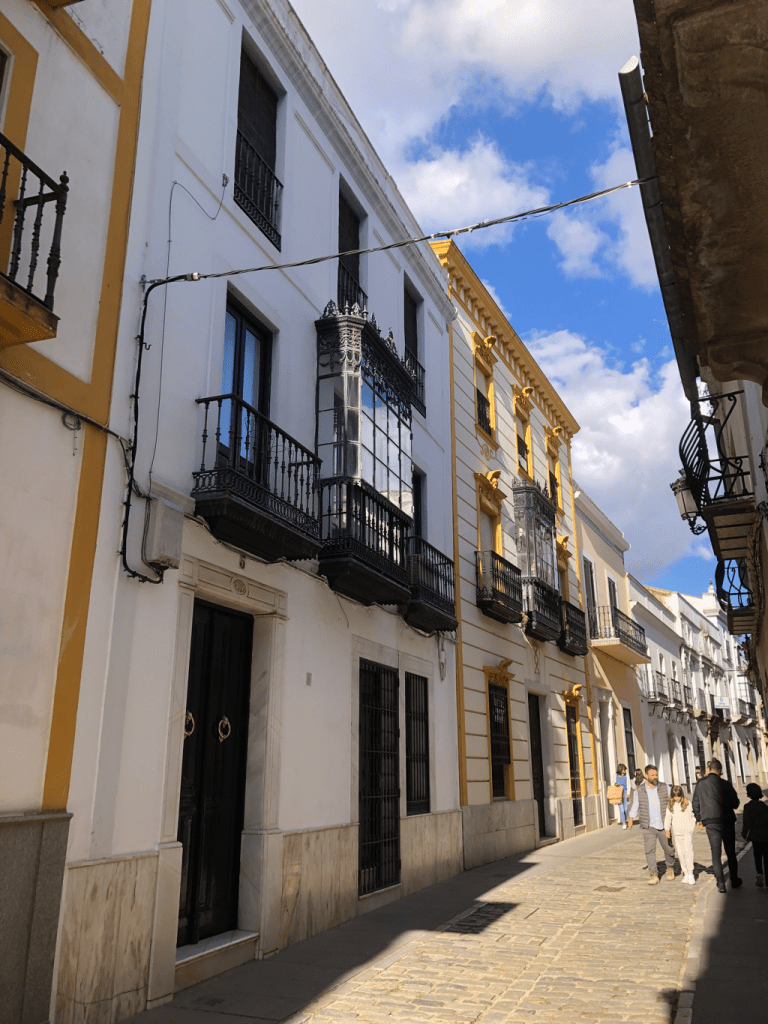
And that’s how we stumbled across Zafra’s lovely old town, with its narrow streets and white washed houses, many of them with attractive glazed balconies:
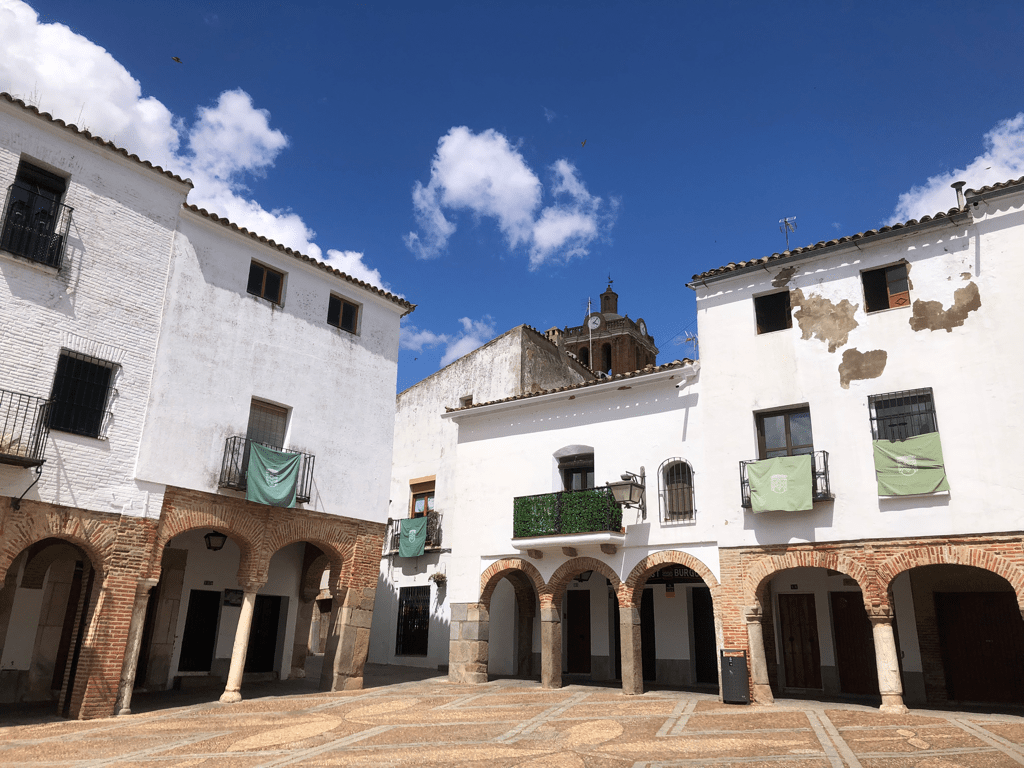
There are two squares, one slightly smaller than the other, imaginatively named the Plaza Chica (the pillars on the left are as wonky as they look):
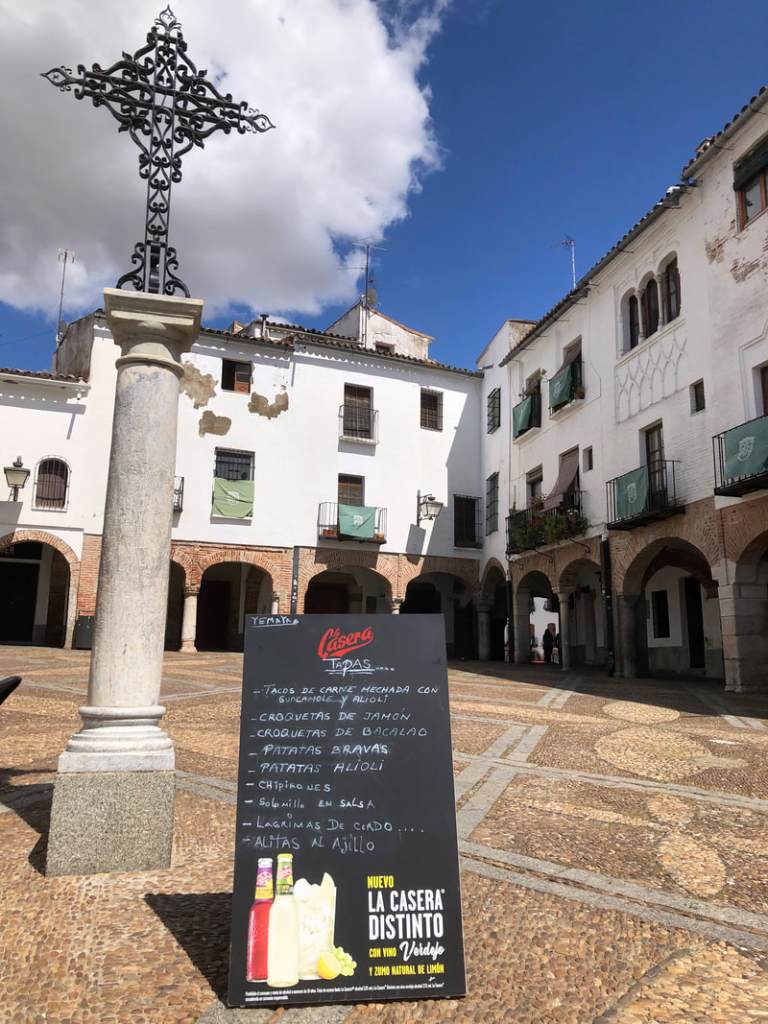
And the Plaza Grande:
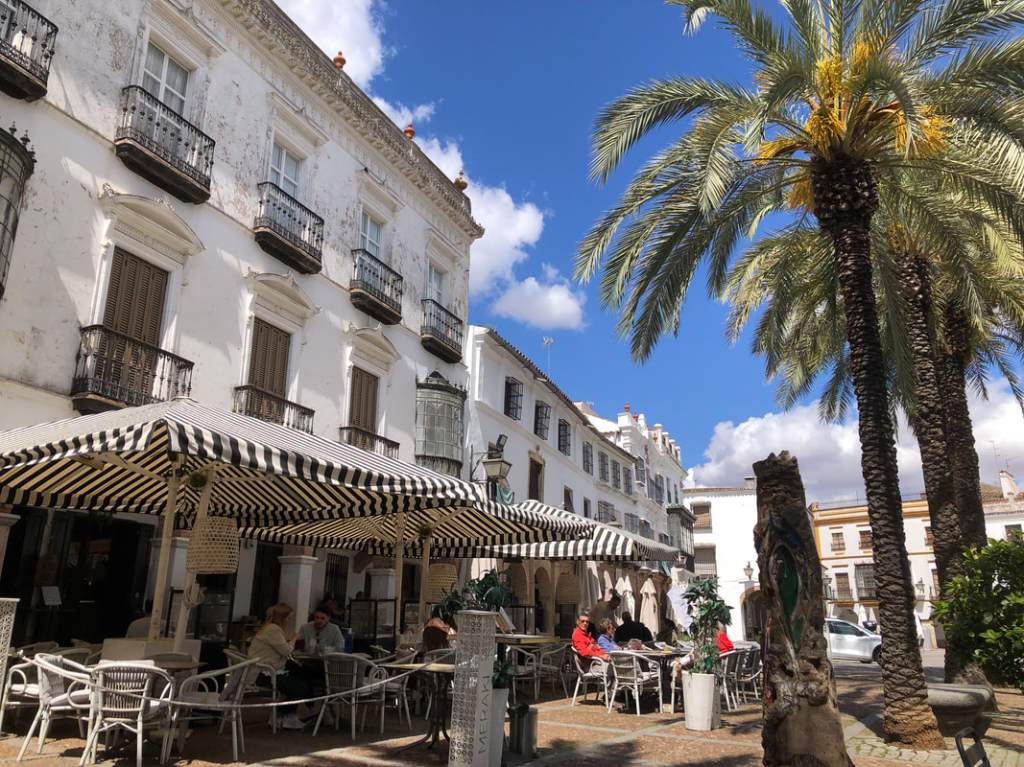
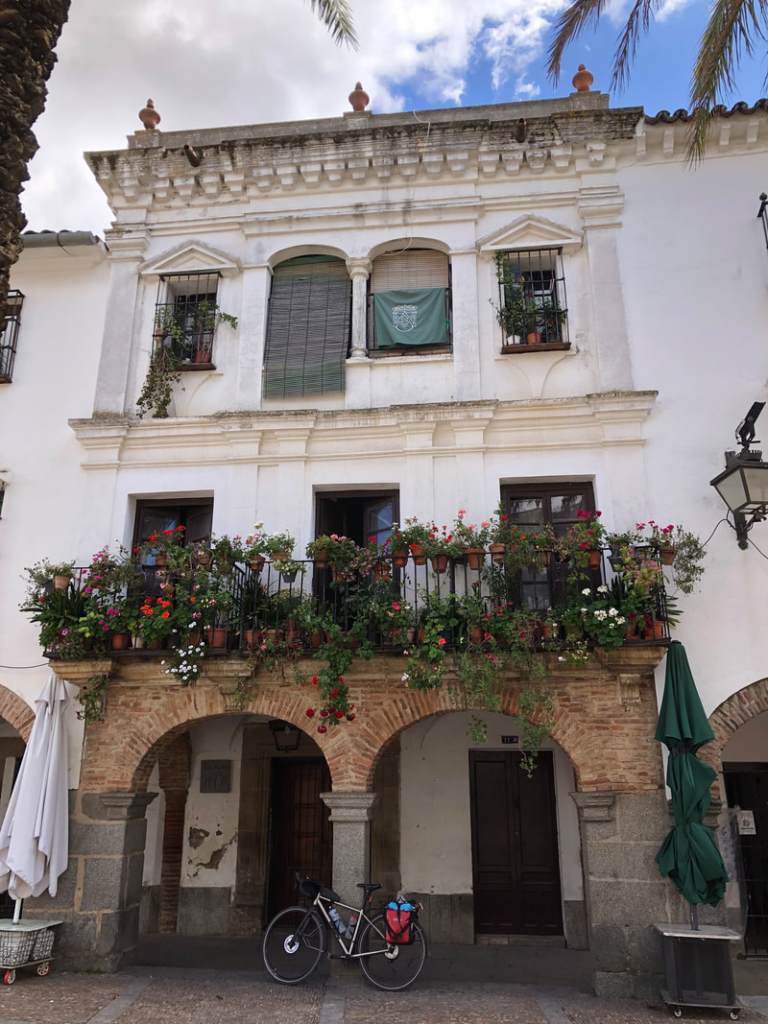
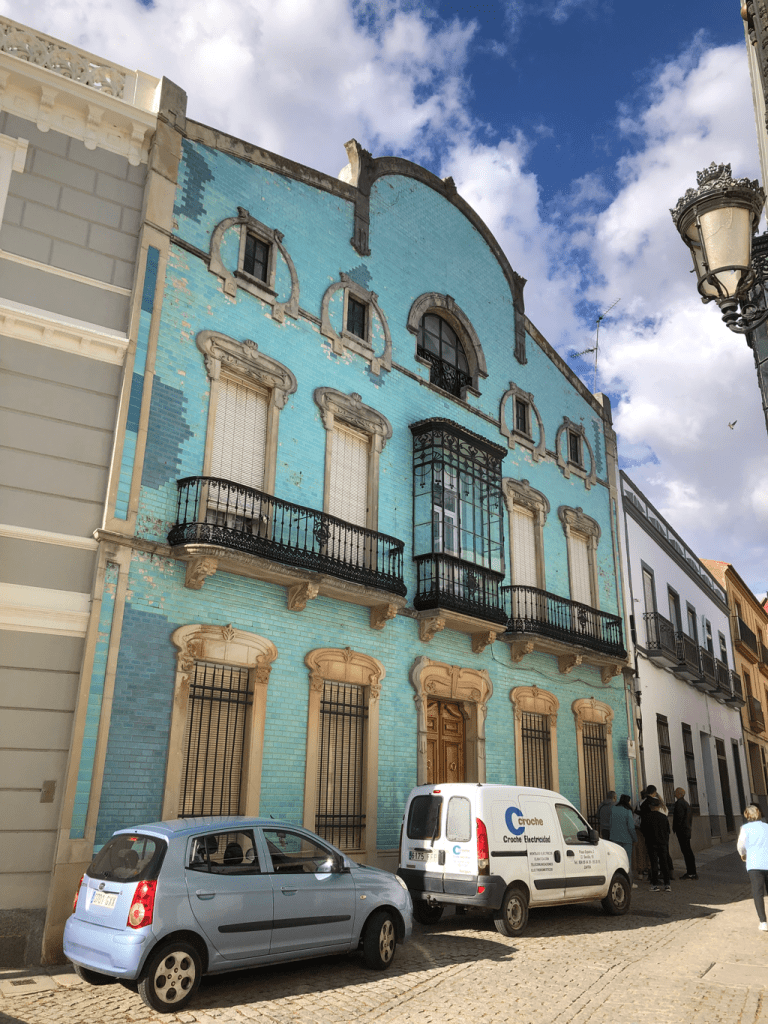
Elsewhere in the compact space within the former town walls there are gorgeous buildings round every corner:
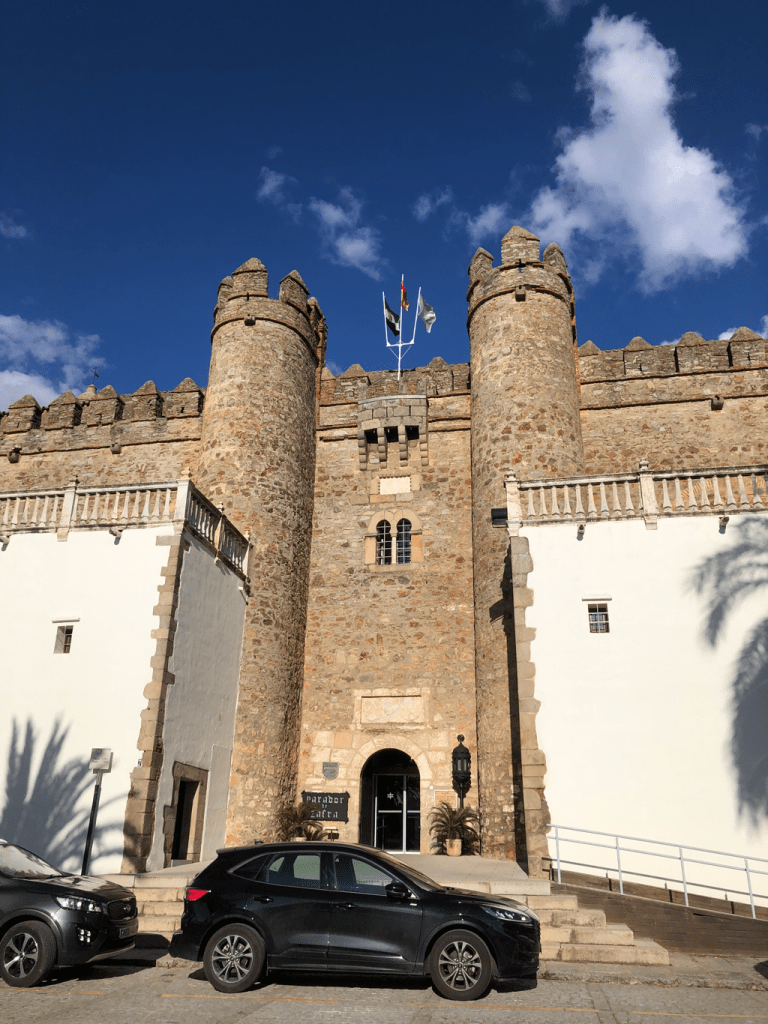
This pretty little town (pop. 16,000) even has a 15th century castle (now a parador hotel):
And a bull ring, though it isn’t as pretty as this one we passed in Almendralejo:
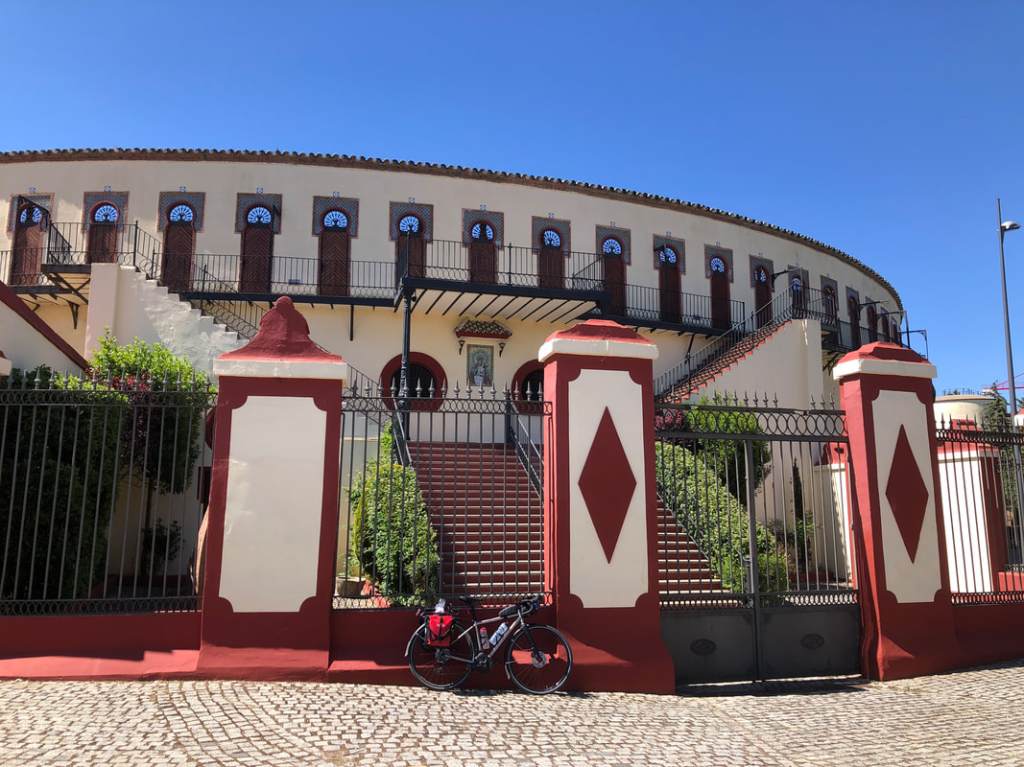
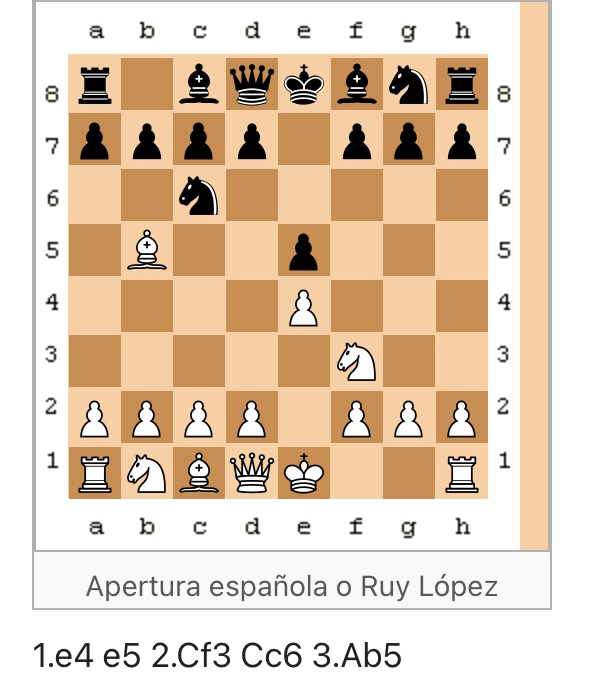
But for chess lovers, Zafra’s most interesting feature will likely be that it was the home town of Ruy López de Segura, the 16th century grand master who popularised the so-called ‘Spanish (or Ruy López) opening’. If you’re dying to know more, here it is: (credit: Wikipedia. Any errors not my own, and don’t ask me what it means):
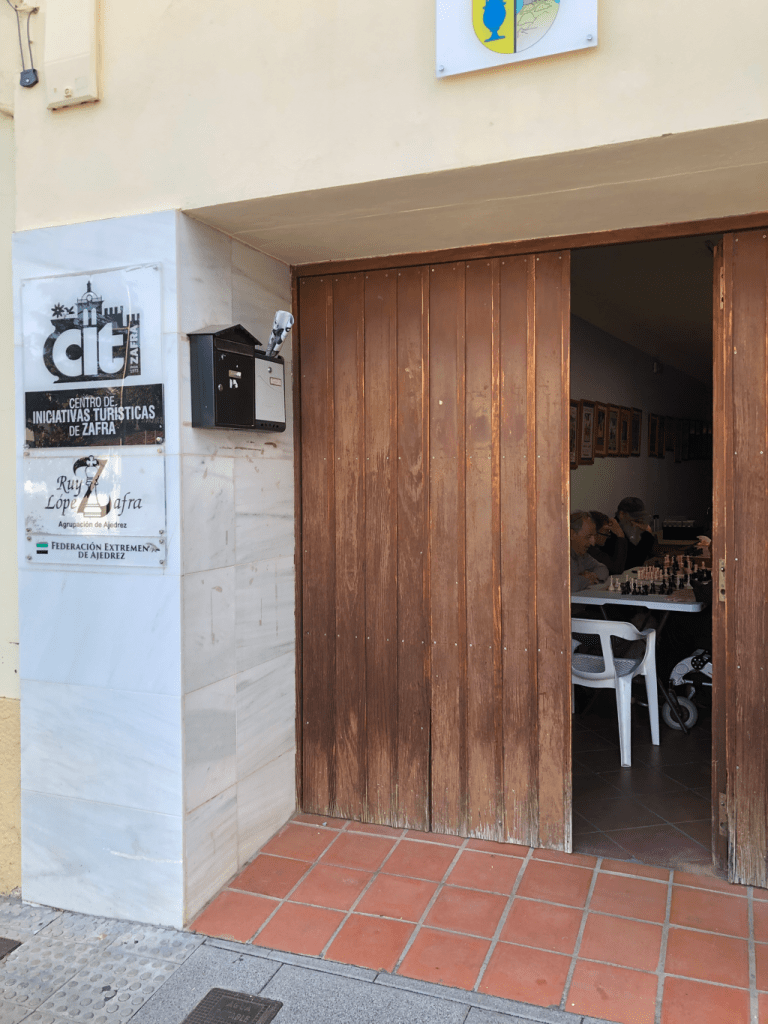
Judging by the packed chess club round the corner from the castle, his legacy is still going strong:
The ride here from Mérida was gently uphill the whole way, but the wind had swung back behind us, so it didn’t feel difficult.
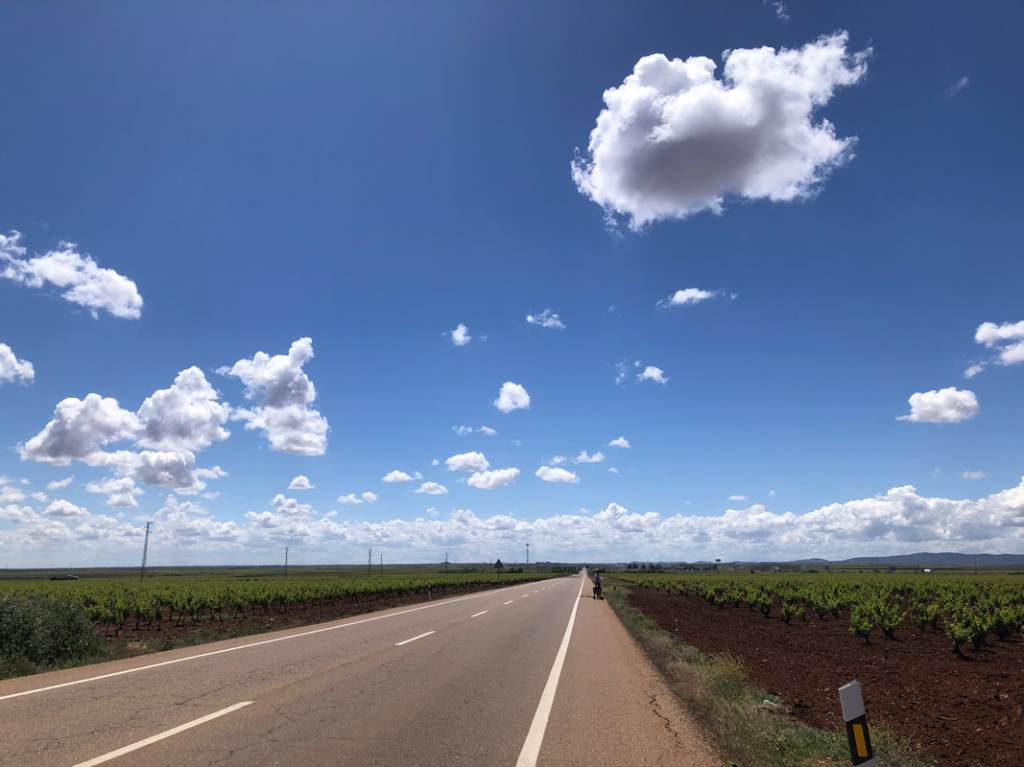
Almost immediately, we found ourselves in wine country:
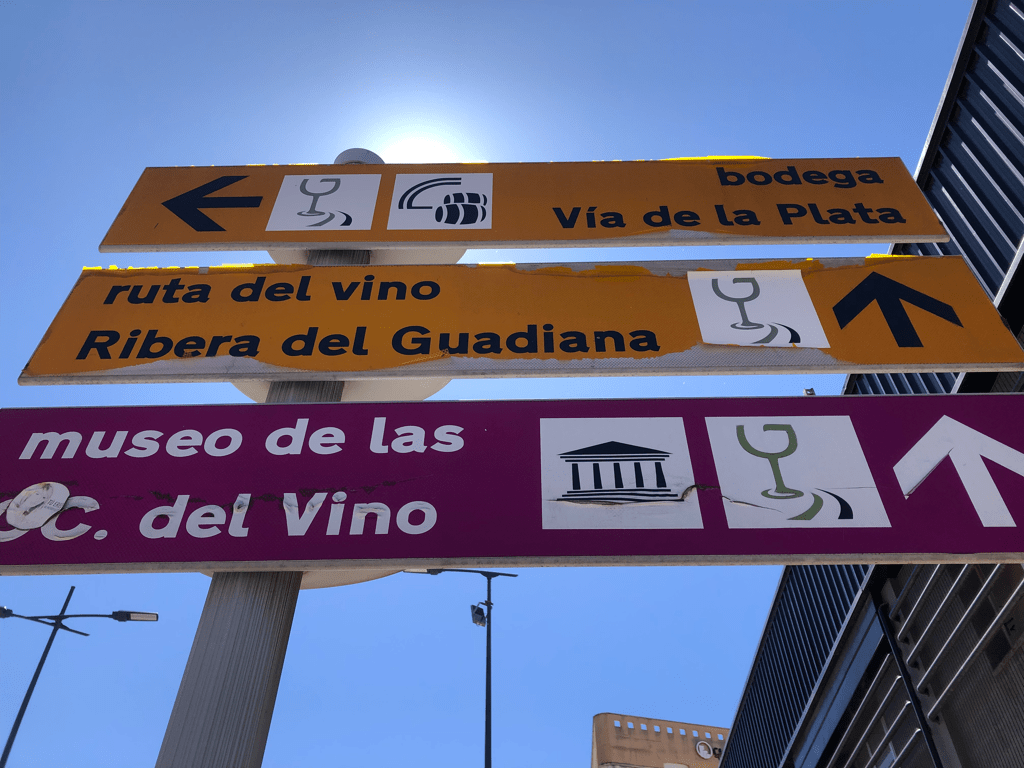
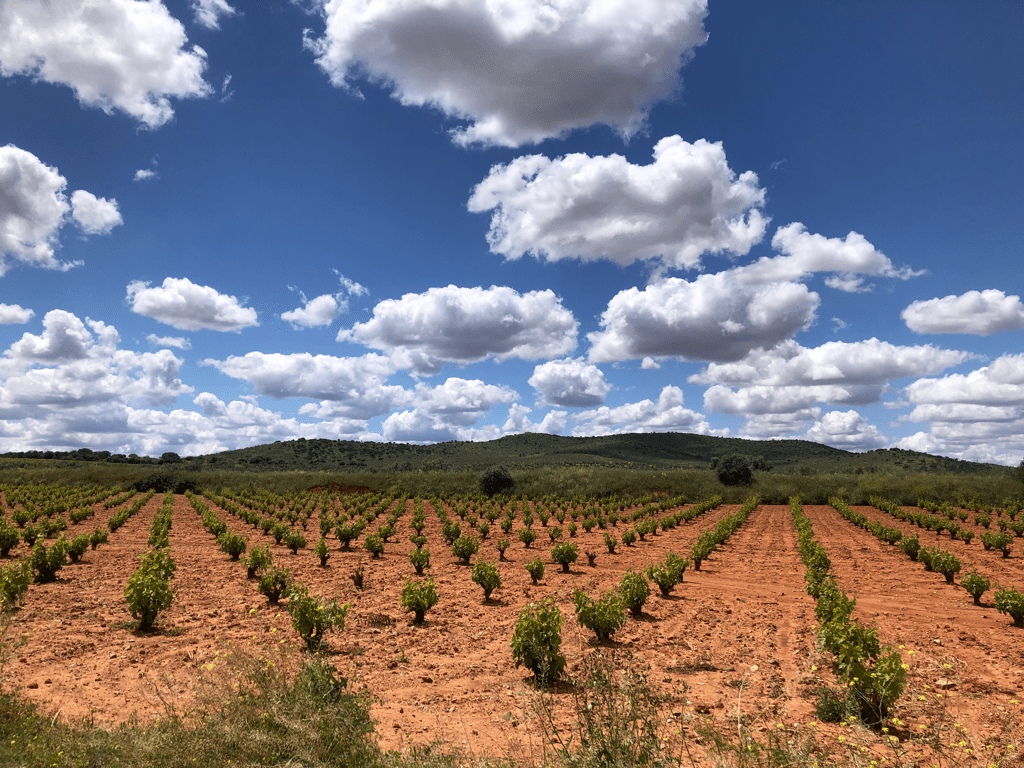
Specifically, sparkling wine:
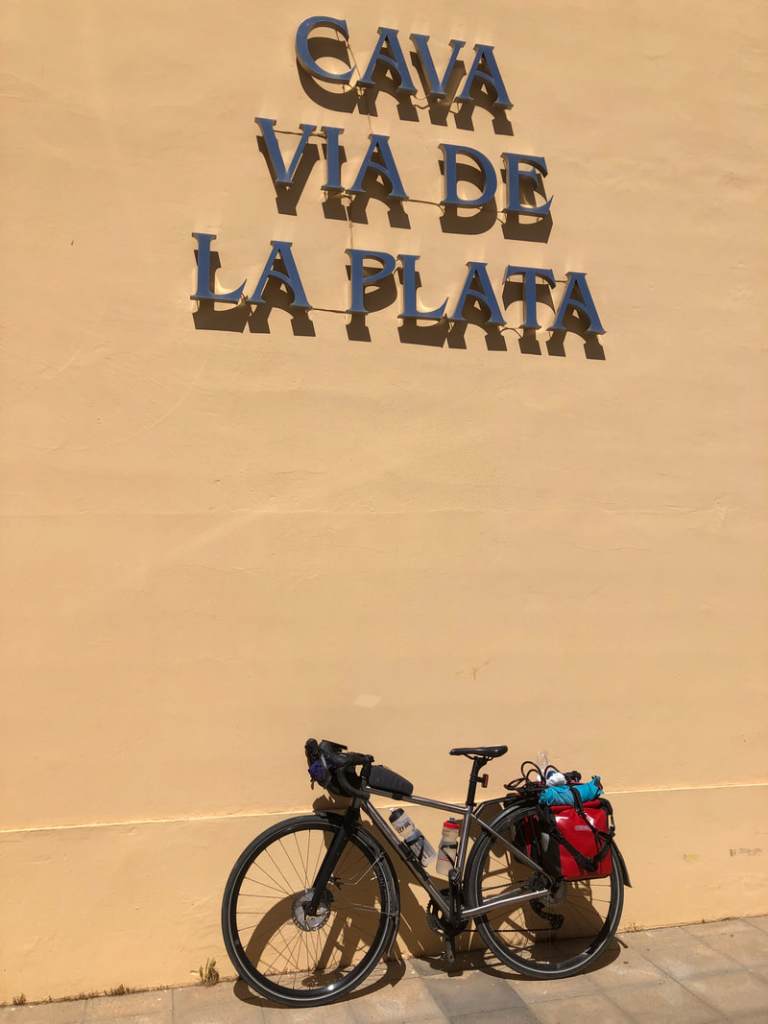
And then olive country:
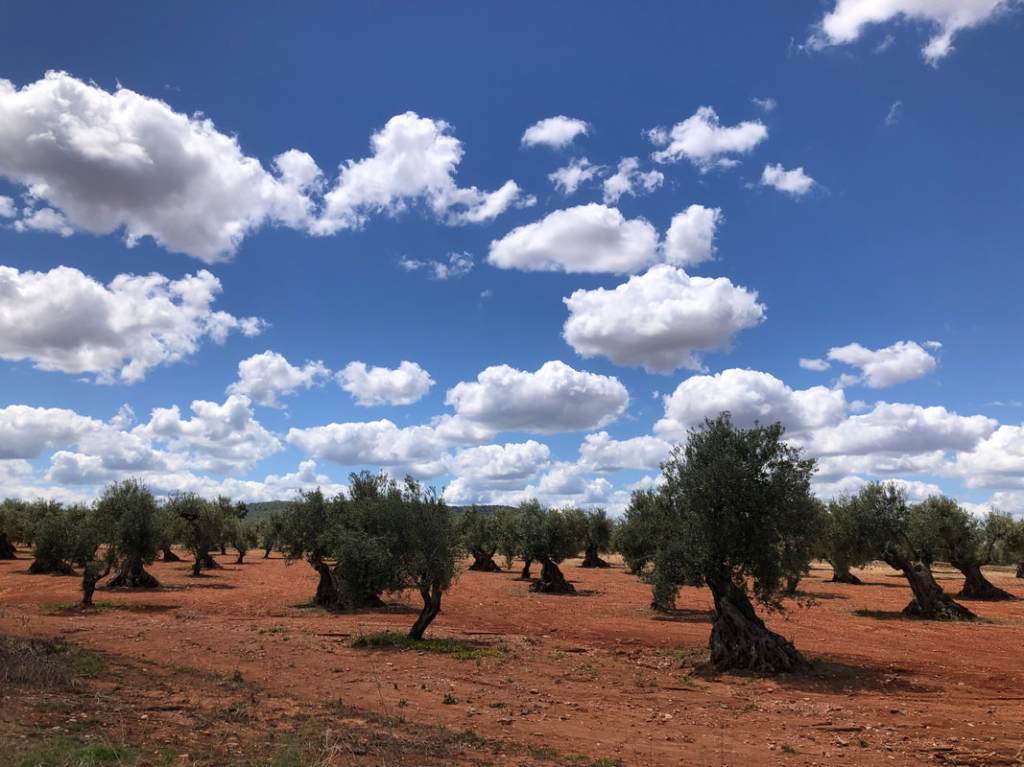
And these trees weren’t the only sign that we were getting closer to Andalucía:
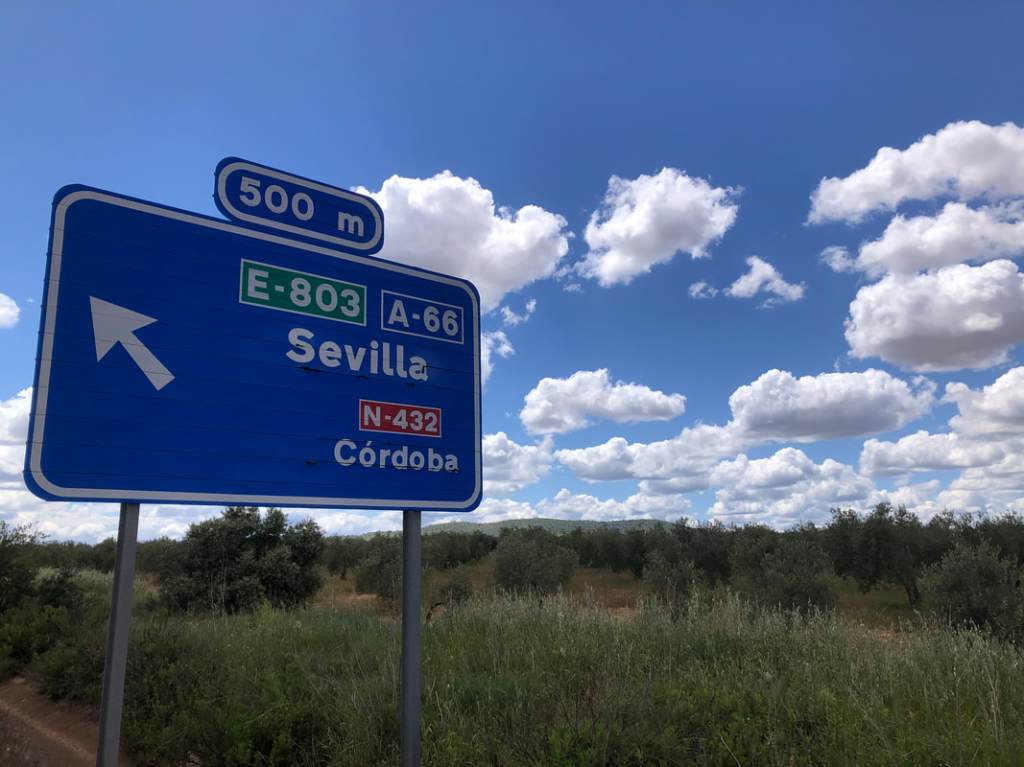
All being well, we should reach Spain’s most southerly region tomorrow. In the meantime, I’ll leave you with a view of our guest house, named after the grand master himself. In a competitive field, it has raced to the top of the rankings among the places we’ve stayed so far.
 clairedavieswriter
Leave a comment